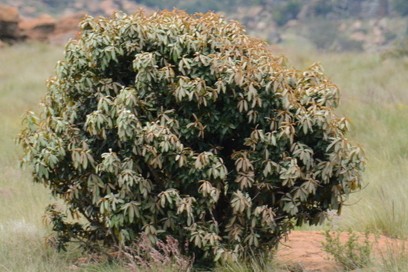
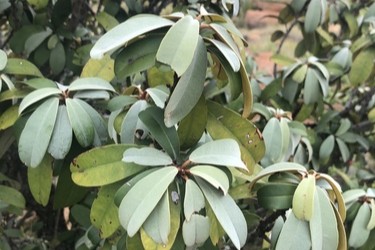
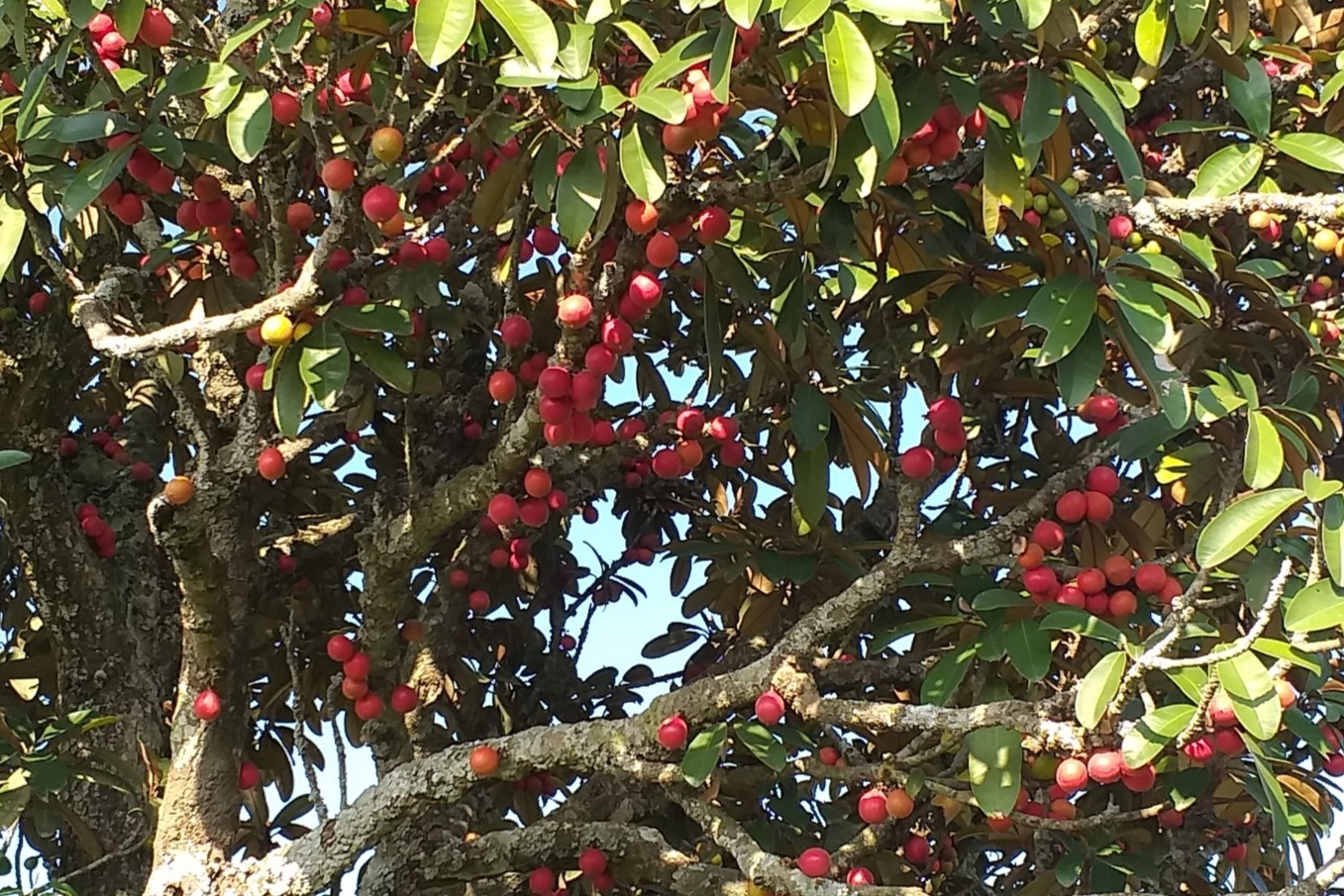
Englerophytum magalismontanum is a hardy, evergreen, multi-stemmed small tree or large shrub, typically 3 – 10 meters tall, with smooth, greyish bark. Leaves are leathery, bronze when young, turning glossy blue-green with a silvery bloom. Small, brownish-pink, star-shaped flowers are clustered along the stems from June to December, followed by bright red, edible berries. The species is common on rocky outcrops, quartzite ridges, riverine fringes, and forest margins, and is adapted to a range of soils and altitudes.
Plant Details
Height
3 - 10 meters (up to 15 meters in forests)
Thorns
None
Soil
Prefers well-drained, loamy or rocky soils; tolerates shallow soils
Combines well with rocky outcrop species and riverine woodland flora.
Caterpillars
Host plant for Boisduval's False Acraea butterfly larvae.
Associations
Descriptions
The edible fruit is relished by birds, monkeys, and other wildlife, supporting seed dispersal. Flowers attract insects, and the plant is a larval host for the Boisduval’s False Acraea butterfly. Dense foliage provides shelter for small animals and nesting sites for birds. The tree is important for wildlife gardens and helps stabilize rocky soils.
Flowers and fruits
Small, star-shaped brownish-pink flowers attract pollinators. Bright red berries are edible and attract frugivorous birds and mammals.
Birds
Fruit is eaten by birds; dense growth provides nesting and cover.
By Seeds:
Sow fresh seeds in well-drained soil; germinates readily.
By Cuttings:
Not commonly used; seed propagation preferred.
Traditional Uses
Fruit used for jams and syrup; bark and roots used in traditional medicine.
Not a primary fodder species; fruit consumed by wildlife.
Not known to be toxic.
Useful for stabilizing rocky slopes, supporting wildlife, and increasing plant diversity in restoration projects.