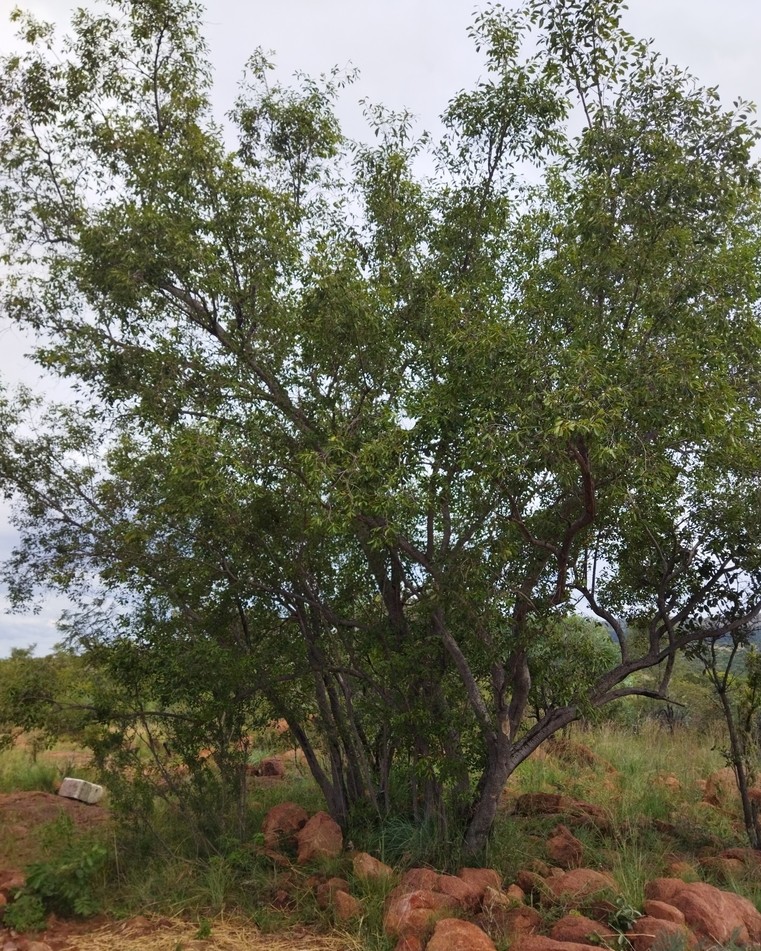
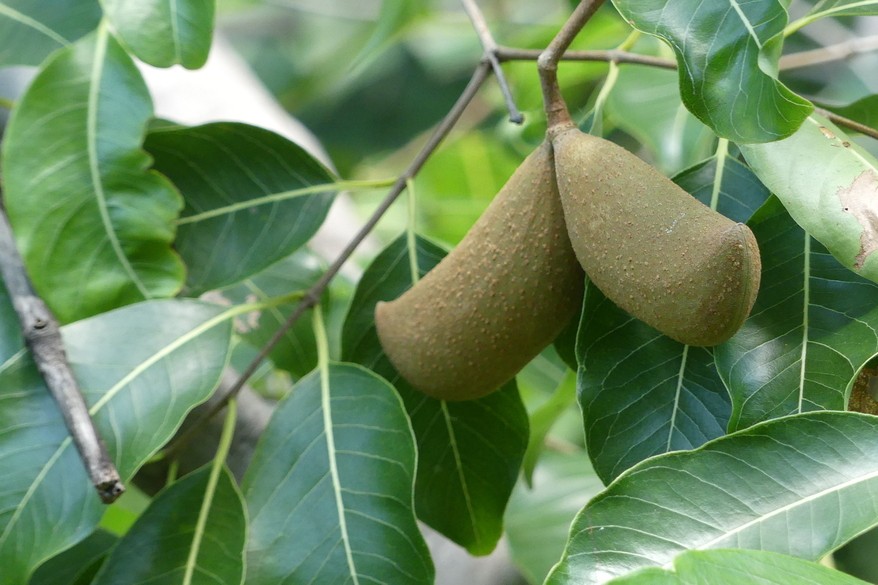
This deciduous, multi-stemmed tree or shrub is typically 2–8 m high, sometimes reaching up to 20 m, with grey-brown to blackish scaly bark. The trunk often displays knob-like lenticels and the crown is wide-spreading and irregular. Leaves are opposite, elliptic, leathery and glossy green. White to cream, fragrant flowers appear from September to December in terminal clusters, attracting many insects. Paired, woody, horn-shaped pods ripen by March–September, each containing 2–4 winged seeds. The tree is visually prominent with its drooping branches and shiny foliage, often dotting open woodland and rocky areas. Its most distinctive feature is that all parts ooze milky sap.
Diplorhynchus condylocarpon serves as a resilient and valuable species for biodiversity, supporting browsers, insects, traditional practices, and ecosystem services across the African savanna and woodland landscapes. It is monotypic (only one species in the genus) and highly variable across its range. It is not currently threatened but is never abundant in any one locality, suggesting some need for monitoring.
Full sun; Thrives on slopes or flat land, typically in warm, dry, frost-free areas. Favors deep sandy or rocky soils in open woodland or bushveld and woodland outcrops.
Aspect
Not frost-tolerant. Grows in warm, frost-free locations and suffers damage in cold climates.
Frost Tolerance
Highly drought resistant, due to deep roots and leathery, water-conserving leaves. Survives well in dry woodland ecosystems.
Found with other fire-adapted and drought-resistant woodland and savanna species, including Bridelia mollis, Xerophyta species, and indigenous grasses and forbs of the region.
Insects: Flowers are heavily visited by a range of insects including bees and butterflies for nectar and pollen. The moth Nephele comma is documented as feeding on this plant.
Soil: Does not fix nitrogen, but provides litter and organic matter, and its deep, spreading roots help stabilize sandy or rocky soils.
Other Flora: Often grows in association with other woodland and savanna species, forming an important component of the understory and middle canopy.
Wildlife: Acts as a crucial browse species—particularly for black rhino and elephants, both of which prefer leaves, twigs, and occasionally bark. Fruits are eaten by small antelope and are a reported favourite of rhino. Provides shelter for a number of woodland mammals, insects, and birds.
Ecosystem Services: Fire-resistant and can withstand repeated burning. It helps prevent soil erosion and contributes to structure and diversity in savanna and woodland ecosystems.
Flowers and fruits
Small, fragrant, white to cream flowers attract various pollinators. The woody paired follicles with winged seeds are wind-dispersed and favored by antelope and rhino.
Birds
Flowers attract nectar-feeding and insectivorous birds and trees may provide perches or nesting sites for small birds, especially in mixed woodlands; though no specific ornithological dependence has been recorded.
By Seeds:
Seeds can be collected from mature, dry pods around September. They should be sown fresh in sandy, well-drained soil in a warm, sunny spot. Germination occurs within several weeks under favorable conditions, and seedlings require protection from cold.
By Cuttings:
Limited information, but propagation from stem cuttings may be attempted using semi-hardwood material treated with rooting hormone in well-drained media.
Traditional Uses
Historical Uses: Latex used for making bird-lime, drum repairs, and gluing feathers to arrows. Sometimes used to patch bicycle tires. Bark and roots occasionally used as rope.
Medicinal Uses: Latex applied to wounds and for treating screw-worm; leaves chewed for treating headaches and stomach issues; root suspensions for blackwater fever; infusions for diarrhea, indigestion, and various ailments. Used broadly across its range in folk medicine for diabetes, pneumonia, tuberculosis, infertility, and more.
Toxicity: Latex mildly irritant, and not considered edible for large mammals in quantity due to possible toxicity.
Pharmacological Action: Extracts have demonstrated antimicrobial and antioxidant properties in laboratory studies; used for wound healing and diabetes management in traditional medicine.
Bioactive Phytochemicals: Contains polyphenols and other compounds with reported pharmacological activity.
Livestock & Fodder: Major browse for black rhino and elephants; fruits eaten by antelope and rhino.
Cultural Significance: Widely respected and used by many southern and central African cultures for medicine, materials, and even ritual purposes.