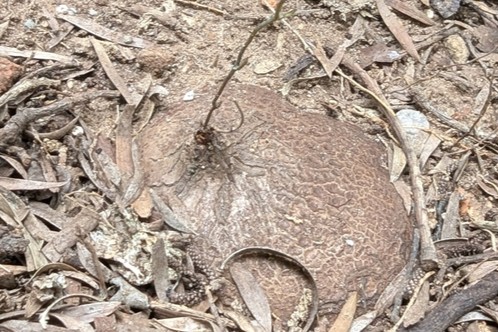
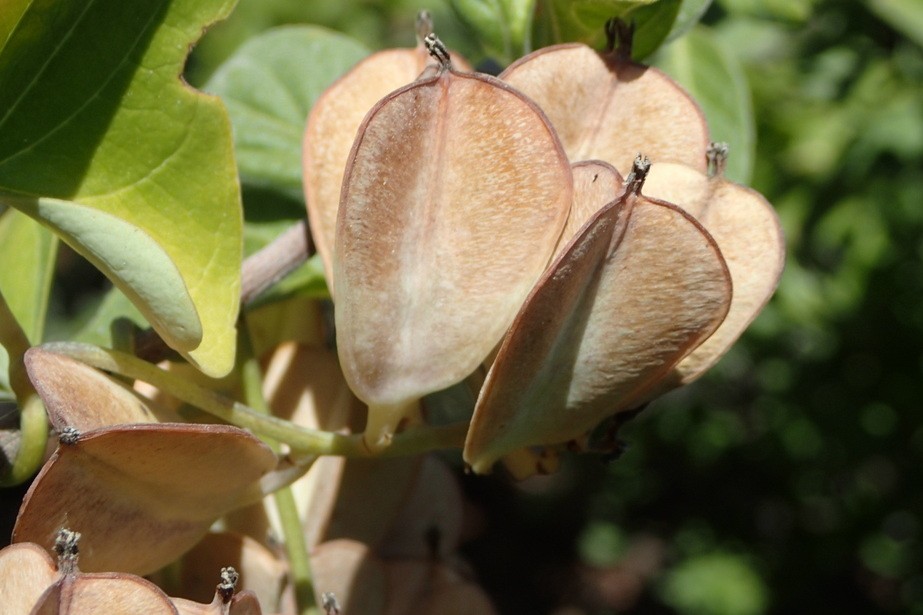
This species is a slender, twining, herbaceous vine growing from an enormous, often dome-shaped tuber that may reach 600–900 mm in diameter. The underground tuber’s surface is dark brown with reticulated markings like an elephant’s skin or tortoise shell. Annual stems, up to 4–5 m long, emerge from the tuber and bear alternate, heart-shaped, deciduous leaves that narrow to a long point. The flowers, unisexual and small, are pale yellowish-green or cream, carried in spikes up to 140 mm or racemes up to 120 mm long during summer (November–February). After pollination, female plants produce yellowish-green, three- to four-winged capsules releasing winged seeds. The robust tuber and twining stems give it strong visual prominence where it grows. Its unique tuber structure protects it from fire and grazing, making it ecologically notable.
Dioscorea sylvatica is a unique and ecologically significant forest-edge species, valued as a bioindicator, a source of historic and current medicine. The plant is especially known for its striking tuber and vulnerable status due to overharvesting for both traditional and pharmaceutical purposes.
The tuber thrives in full shade, while climbing stems scramble into areas of partial shade, or full sun.
Aspect
This plant is adapted to cool, winter-dormant conditions. Above-ground growth dies back with frost, but the thick, corky tuber persists, protected under soil or leaf litter.
Frost Tolerance
Moderate; survives dry seasons via its large underground tuber, which stores water and nutrients during dormant periods. The plant does best with regular moisture during active growth.
Often found among other forest margin climbers (e.g., Clematis, Senecio tamoides), shrubs, and understory species of forests, fynbos, grassland, and thicket. Combines well in biodiversity gardens with indigenous, shade-tolerant, or caudiciform plants.
Insects: Specific pollinators for D. sylvatica are not well documented, but its small flowers and dioecious nature indicate reliance on insect vectors for cross-pollination.
Other Flora: Grows among thicket, savanna, and forest edge species, filling a unique caudex-niche in the understory.
Wildlife: The hard, corky tuber, protected underground, is largely inaccessible to herbivores.
Ecosystem Services: Provides moderate value for erosion control, structural diversity, and as a specialist species indicative of intact or recovering habitats.
Flowers and fruits
Pollinators: Most likely small flies, bees, or beetles, though not well-studied.
Fruit/Seed Dispersal: The three- or four-winged capsule splits to release wind-dispersed seeds.
Birds
No documented role as a food or nesting resource for birds; however, its trellis-forming structure may occasionally provide perching habitat in dense growth.
By Seeds:
Collect fresh seeds and remove the papery wing, before sowing into standard, humus-rich seedling mix. Kept moist but well-drained, the seeds germinate rapidly (within 10 days). Seedlings benefit from individual pots and will climb if provided support. The tuber grows faster if left undisturbed below the surface.
By Cuttings:
Propagation is primarily by seed. Tuber division is possible but not typically used due to slow tuber growth and potential stress or infection.
Traditional Uses
Historical Uses: Used as both a ceremonial plant and limited food source. Dioscorea sylvatica experienced a significant population decline due to overharvesting, particularly between 1955 and 1960. This sharp decline was the result of indiscriminate commercial harvesting for diosgenin, a compound extracted from the tuber and used to produce cortisone and other steroid hormones. Estimates suggest that between 116,000 and 380,000 mature individuals were removed from wild populations during that period. Even though commercial exploitation eventually slowed, harvesting for traditional medicine remains ongoing and continues to prevent population recovery. As a result, Dioscorea sylvatica is classified as Vulnerable on the Red List of South African Plants, and ongoing exploitation remains a serious conservation concern.
Medicinal Uses: Used as a blood purifier, for treating skin problems, wounds, and inflammation. Traditional preparations involve heating the scooped tuber in water for topical use.
Toxicity: Contains dioscorine (alkaloid); oral consumption in large quantities is not advised.
Pharmacological Action: The active compound diosgenin is a precursor for cortisone and steroid medicines.
Bioactive Phytochemicals: Diosgenin, dioscorine.
Livestock & Fodder: Not typically used for fodder; mostly preserved for human medicinal use.
Cultural Significance: Held in high cultural value among Xhosa, Zulu, and other groups as a charm and healing agent, and is integrated into traditional knowledge systems.