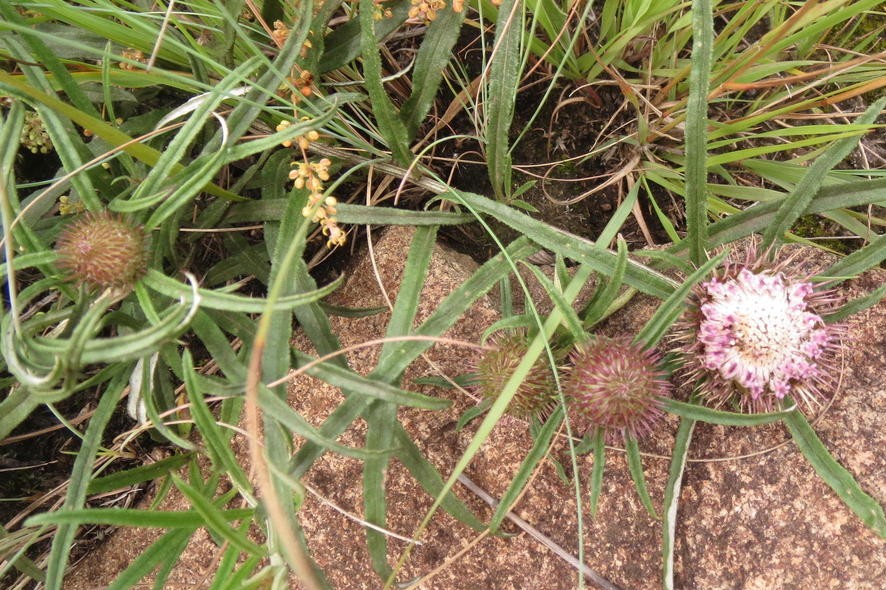
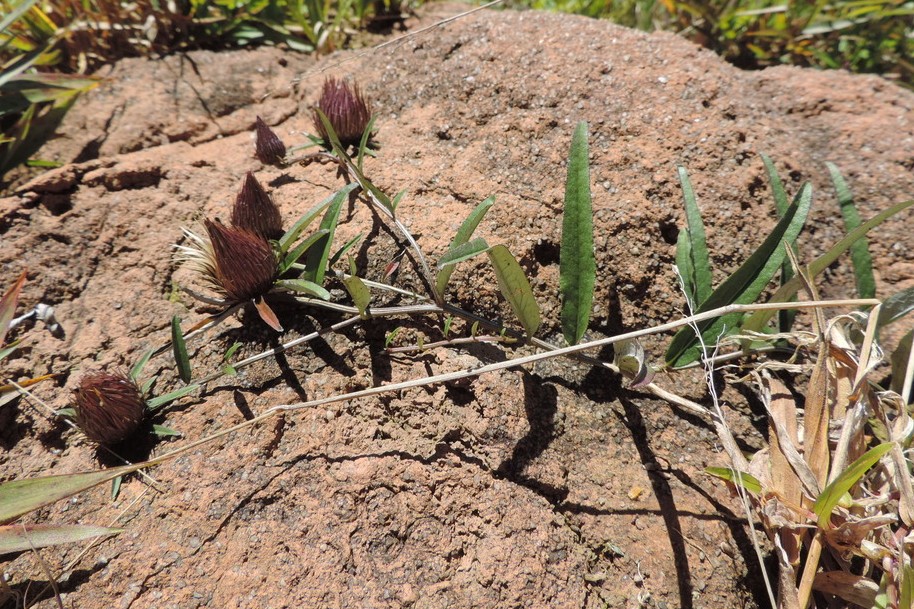
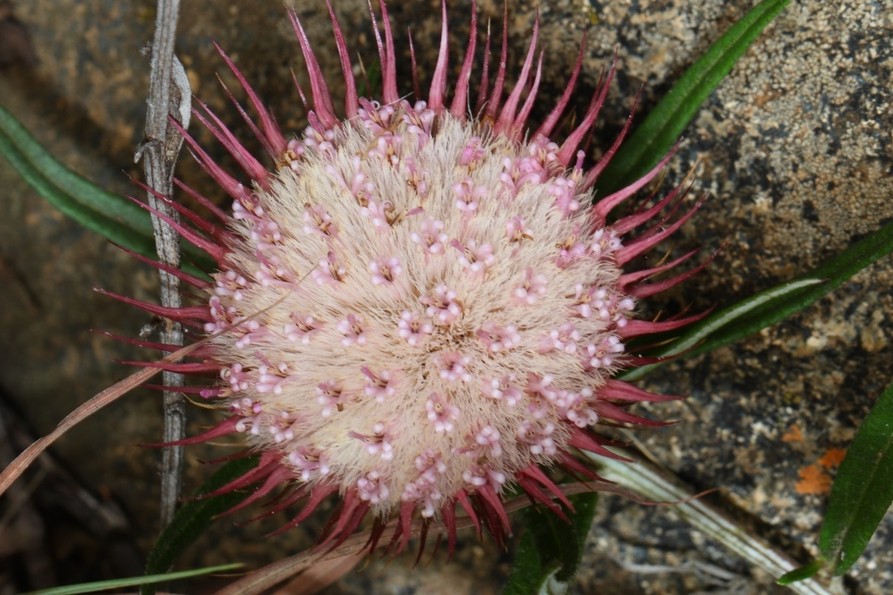
It is a prostrate, decumbent, or sometimes erect perennial herb, recognized for an underground tuber and several erect, often hairy stems arising from a woody rootstock. Its narrow leaves are rough and green or grayish, often stalkless and closely attached to the stems. The flowers are terminal, cup-shaped heads, usually pink, lilac, or white, most prominent in late summer through winter (June–August in southern Africa). Its persistent pappus facilitates wind dispersal of seeds, aiding colonization.
It is often found in stony grasslands and savannas. Although the species is visually modest in grassland settings, it can form small clusters that stand out when in flower.
Dicoma anomala stands out for its resilience, broad medicinal repertoire, and ecological functions in grassland restoration, erosion control, and biodiversity support. Its prominence in traditional health systems underscores its dual importance for people and nature.
Dicoma anomala thrives in full sun, typically in open grasslands or on hillsides facing any direction, but is especially abundant on well-drained, sandy or doleritic soils. It can be found on both gently sloping and flat terrains.
Aspect
Good frost tolerant. Foliage will die back in winter, but resprouts from the tuber in spring.
Frost Tolerance
Moderate to high drought tolerance, mostly due to its perennial tuber and drought-resilient growth form.
Other grassland forbs such as Helichrysum, Felicia, Berkheya and grasses.
Caterpillars
Not available
Associations
Descriptions
Insects: Though specific pollinators are not widely documented, the flower structure supports visitation by various bees and other insects. Seeds are adapted for wind dispersal rather than animal dispersal.
Soil: No strong evidence for nitrogen fixation, but as a pioneer species, it can recolonize disturbed soils and contribute to early successional stages after fire or erosion events.
Wildlife: The plant’s tubers and roots may be consumed by some small mammals; however, more important is its ecological presence as structure within short-grassland mosaics.
Ecosystem Services: Its persistence and rapid regrowth post-disturbance make it valuable for soil stabilization, erosion control, and early restoration of degraded grasslands.
Flowers and fruits
Mauve/white/pink/purple flower heads attract insects; seeds wind-dispersed by barbellate pappus.
Birds
Not a prominent food plant for birds.
By Seeds:
Seeds should be collected as soon as they mature and are dispersed by wind. Sow in spring in a well-drained medium and place containers in full sun. Germination typically occurs within 12–20 days, and seedlings are easily transplantable, flowering within a single season.
By Cuttings:
There is limited documented success with vegetative propagation; the plant is best propagated through seed.
Traditional Uses
Historical Uses: Traditionally well know for its medicinal properties.
Medicinal Uses: Extensively used to treat fever, malaria, respiratory infections, diabetes, colic, dysentery, toothache, wounds, and abdominal pain across multiple countries.
Toxicity: No major toxicity reported in humans; however, roots and decoctions should be used with traditional knowledge.
Pharmacological Action: Documented laboratory activity includes antimalarial, anti-inflammatory, anticancer (notably breast and lung cancer bioactivity), and antimicrobial effects.
Bioactive Phytochemicals: Contains various sesquiterpene lactones and flavonoids with significant medicinal properties.
Livestock & Fodder: Used externally for wound care in livestock, and the decoction administered for gall sickness.
Other Notable Ecological Information:
A novel bacterial endophyte, Bacillus dicomae, was identified living within D. anomala, indicating unique microbe-plant associations with potential healthcare applications.
The plant is not threatened but should be protected from over-harvesting due to its high demand in traditional medicine and potential role in ecological restoration.