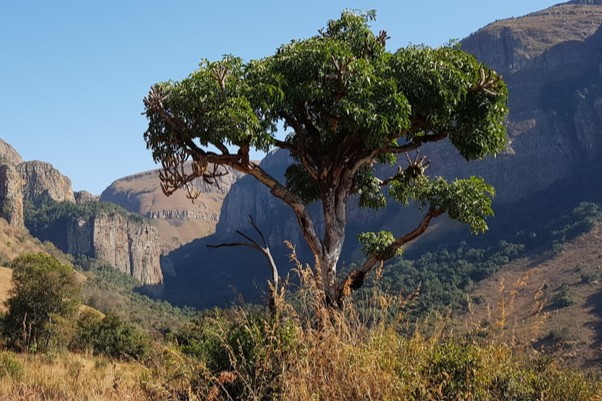
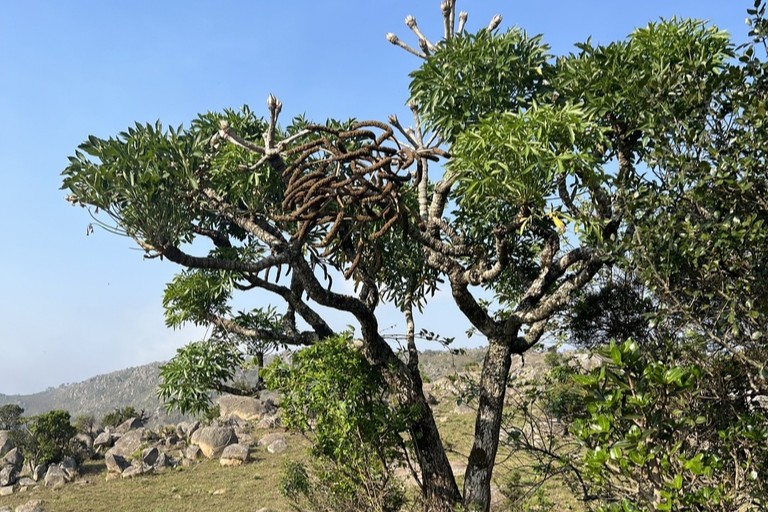
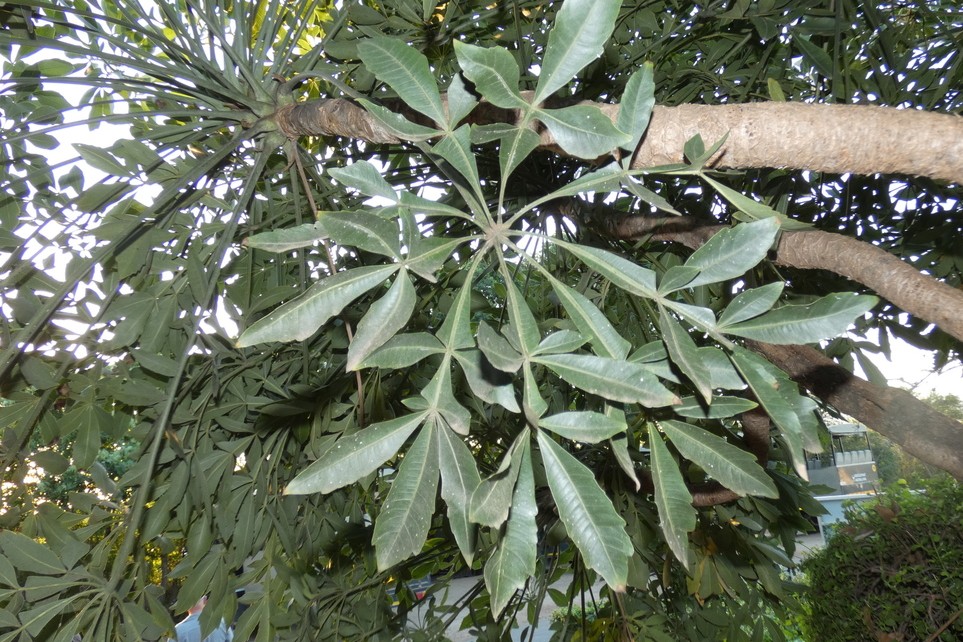
Cussonia spicata, the spiked or common cabbage tree, is a fast-growing, evergreen African tree supporting significant Lepidoptera diversity—including large emperor moths and Charaxes butterflies. A medium to large tree (typically up to 15 m in height) with a thick, corky trunk and distinctive large, shiny, twice-compound leaves clustered at branch tips. The rounded crown makes it and attractive feature tree for landscaping. Flowers are greenish, borne on upright, candle-like spikes from April to June. The black fruits that ripen soon there after, are relished by birds.
Plant Details
Height
8 - 15 m, occasionally up to 20 m
Thorns
Absent
Soil
Prefers moist, well-drained soils but tolerates a range of conditions.
Insects: A larval host for emperor moths (Bunaea alcinoe, Saturniidae) and several Charaxes butterfly species, as confirmed in Metamorphosis and Africa Tropical Butterflies. These large moth and butterfly larvae can defoliate trees entirely, but the tree responds by resprouting and sometimes returning stronger.
Soil: Aggressive, swollen roots stabilize soils and dig for moisture, aiding survival and soil health.
Wildlife: Fruits attract fruit-eating birds. Leaves are eaten by elephants and livestock.
Ecosystem Services: Prominent feature tree in bushveld and savanna; good for rehabilitation of moist and rocky sites.
Flowers and fruits
Green flowers are pollinated by generalist insects. The rich, black fruits are an important food source for birds, especially during autumn and winter.
Birds
Numerous fruit-eating birds, such as bulbuls and starlings visit for its nutritious fruit. Foliage also provides cover and sometimes forage for insectivorous birds during caterpillar outbreaks.
By Seeds:
Sow ripe fruits soon after collection in well-drained soil. Germination takes 1-2 months. Deep seed trays allow for proper root development. Handle seedlings gently to protect the fleshy roots and transplant once established.
By Cuttings:
Rarely propagated from cuttings, as these seldomly form healthy roots and tubers. Seed propagation is preferred.
Traditional Uses
Historical Uses: Leaves used traditionally for indigestion. Roots are occasionally used fresh for hydration by local communities. Soft wood for mole traps and other household items.
Medicinal Uses: Root decoctions are remedies for fever, malaria, digestive complaints, and mental health conditions in several African traditions.
Toxicity: No significant issues reported. The roots and young shoots edible in small amounts.
Pharmacological action: Contains compounds with possible antimicrobial and anti-malarial actions; widely studied for traditional medical uses.
Livestock & Fodder: Roots and leaves sometimes used to feed livestock, especially during droughts. Fruits are important wild food for birds and other animals.
Cultural Significance: Used for marking boundaries, grave sites, and as a shade tree in homesteads and kraals (“kiepersol”=parasol).
Ecological and horticultural significance: Cussonia spicata shows a strong ability to recover after total leaf-loss from caterpillar outbreaks or browsing, rapidly regrowing foliage (sometimes with increased vigor) making it an exceptionally resilient addition to wildlife gardens and restoration sites.