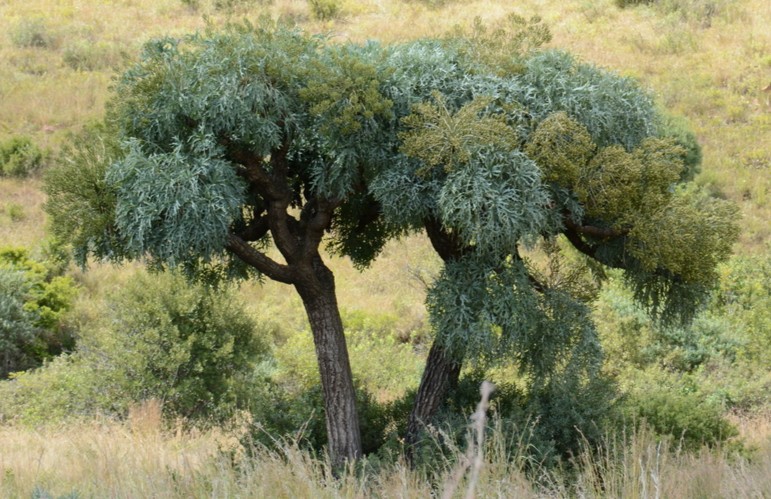
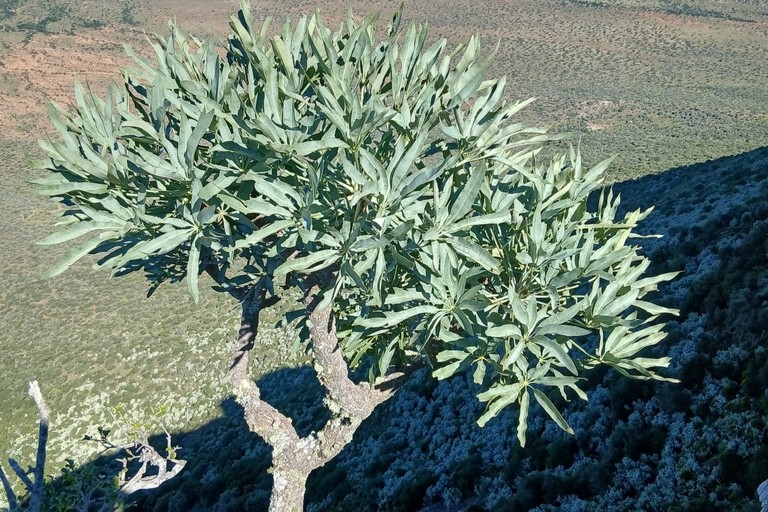
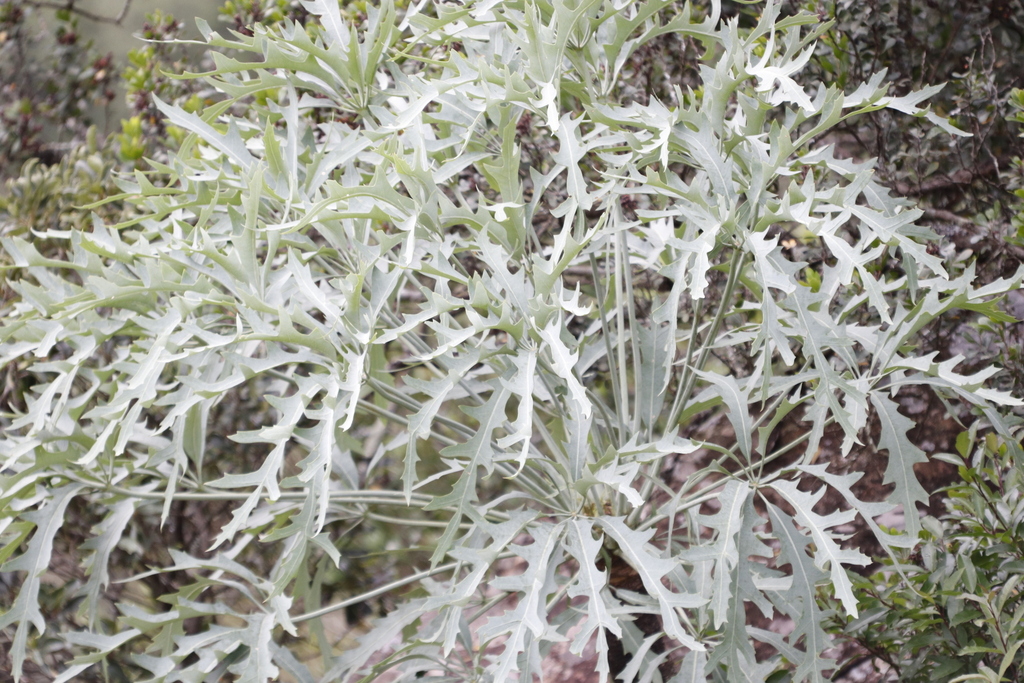
Cussonia paniculata is a thick-set, often squat tree (up to 5m), with a swollen trunk, tuberous rootstock, and grey-green, digitately compound leaves forming a dramatic, umbrella-like canopy. The trunk is prominent, thick and corky, offering it some protection against fire. The leaves are large, grey-green, palmate or deeply lobed, clustered at branch tips. New leaves emerge in spring. Flowers are small and green, in dense, branched panicles at the end of branches. These are present from Jan – Apr, followed by fleshy, purple-maroon fruits (May – Jun).
Visually distinctive for its sculptural form and foliage; a dramatic focal point in gardens and landscapes.
Insects: The tree is host for the large caterpillars of the Cabbage-tree emperor moth, Bunaea alcinoe (Saturniidae), whose larvae feed on the leaves and can rapidly defoliate the tree.
Soil: Tuberous roots store water, supporting the tree in dry spells, and stabilizing rocky habitats.
Wildlife: Birds are attracted by the fruits and use dense foliage for cover. Leaves are browsed by goats and other livestock.
Ecosystem Services: Plays a pioneer role on rocky outcrops and mountainsides, promoting stabilization and biodiversity in harsh environments.
Flowers and fruits
Small, green flowers in branched panicles attract insects such as bees, butterflies, flies and wasps. Fleshy, purple-maroon fruits are eaten by birds and mammals; seeds dispersed by animals.
Birds
Birds feed on the ripened fruits and may perch or shelter in the canopy. Specific fruit-eating bird species include starlings and bulbuls. Insectivorous birds frequent the foliage during caterpillar outbreaks.
By Seeds:
Best propagated from fresh, ripe fruits. Seeds should be sown soon after harvest, ideally in deep seed trays to allow tuber formation. Summer sowing germinates in 4 weeks, whilst winter sowing takes up to 7 weeks. Do not over water the seedlings and transplant at 4 months, taking care not to damage the fleshy roots.
By Cuttings:
Not recommended. Cuttings rarely form a proper tuberous rootstock, leading to weaker plants.
Traditional Uses
Wood used for brake blocks, utensils; roots peeled and eaten for water; leaves used as fodder; medicinal uses for infections, inflammation, malaria.
Historical Uses: The wood was used for wagon brake-blocks and utensils. Leaves used as fodder for livestock. The tuberous roots were consumed as a water source in times of drought.
Medicinal Uses: Traditional medicine uses root extracts for infections, inflammation, and malaria; pharmacological studies back antimicrobial activity.
Toxicity: No significant toxicity recorded; leaves and roots are edible in moderation.
Pharmacological action: Evidence of antimicrobial, anti-inflammatory activity in laboratory tests.
Bioactive phytochemicals: Contains saponins and other bioactive compounds described in ethnopharmacology literature.
Livestock & Fodder: Valuable fodder tree, especially in dry regions.
Cultural Significance: Symbolic as a shade or sun indicator (“kiepersol” = parasol); associated with rural livelihoods.
Ecological and horticultural value: Cussonia paniculata is highly resilient to heavy browsing and caterpillar outbreaks. After being completely denuded, it may regrow with a flush of vigorous new leaves and sometimes returns stronger, making it both ecologically robust and a reliable feature in gardens and restoration sites.