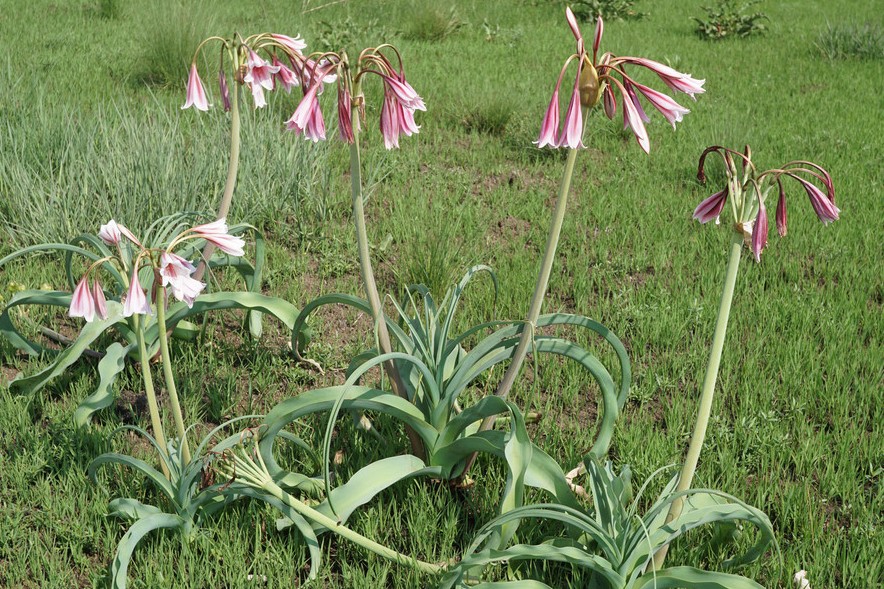
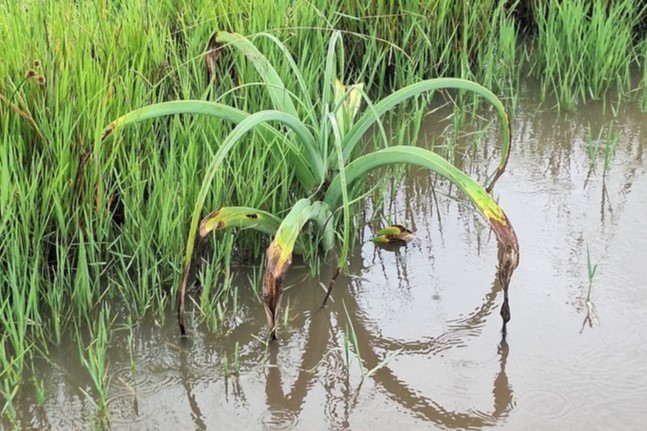
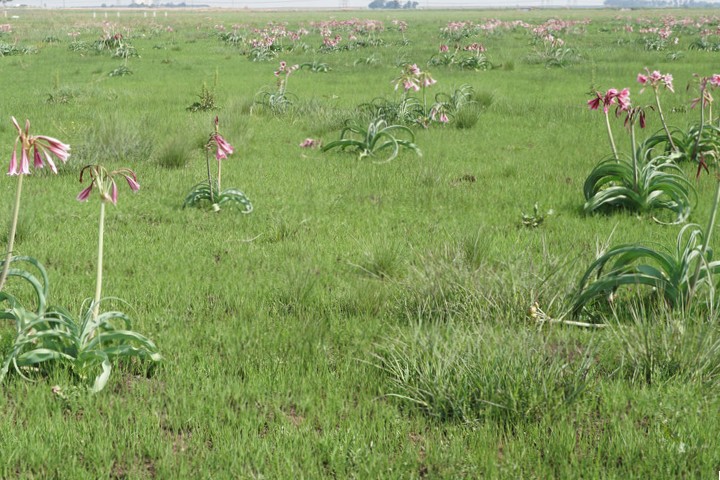
Large, robust, deciduous, perennial, bulbous herb up to 1 m tall (sometimes larger in ideal conditions). Forms large clumps of strap-shaped, gracefully arching, blue- to grey-green leaves (up to 88 cm long, 4 – 8 cm wide).
Large, tunicated, ovate bulbs (7 – 13 cm diameter) with a long neck (up to 30 cm).
In spring and summer, produces tall, sturdy peduncles (40 – 90 cm) bearing umbels of 6 – 16 large, funnel-shaped, pendulous, sweetly scented flowers (usually pink with a deep red or pink midstripe, but can range white to red). Flowers attract pollinators and are followed by subglobose, green fruit capsules (3 – 7 cm) containing large, smooth seeds.
Foliage dies back in winter.
Dramatic accent for wetland gardens, ponds, and naturalized plantings; floral emblem of the Free State.
Plant Details
Height
50 - 100 cm (leaves), inflorescence up to 1 m
Thorns
Absent
Soil
Prefers deep, moist, black clay or sandy soils; adaptable if well-drained
Fruit is a large, subglobose capsule with smooth, fleshy seeds that germinate immediately on falling.
Seed dispersal by water and gravity.
Birds
Seeds may be moved by waterfowl; flowers may attract nectar-feeding sunbirds. Sunbirds and bees pollinate flowers.
By Seeds:
Collect mature bulbous seeds and plant immediately on moist soil; seeds do not dry or store well and are best sown directly after harvest.
Germination occurs within days, best in spring and early summer.
By Cuttings:
Propagate by dividing the bulbs in late dormancy.
Traditional Uses
Historical Uses: Important Zulu and Sotho medicinal plant; bulbs used for treating colds, rheumatism, swelling, varicose veins, wounds, and as support during childbirth and breastfeeding. Leaves applied to wounds, bulbs brewed for various remedies. Flowers sometimes placed on swollen joints for relief.
Medicinal Uses: Used for respiratory complaints, rheumatism, wound care, milk stimulation, and as a spiritual home protector; bulbs and flowers in decoctions or topical pastes.
Toxicity: No major toxicity, but strong alkaloids may cause mild irritation if misused.
Pharmacological Action: Contains acetyl cholinesterase inhibitor alkaloids; anti-inflammatory and anti-malarial potential shown in studies.
Bioactive phytochemicals: Alkaloids (ACHE inhibitors), saponins, possible anti-inflammatory compounds.
Livestock & Fodder: Occasionally browsed in wet areas; not a regular forage plant due to strong chemistry.
Cultural Significance: Regarded as a home protector, used in fertility rites and ceremonies, and for medicinal charms across many southern African cultures.