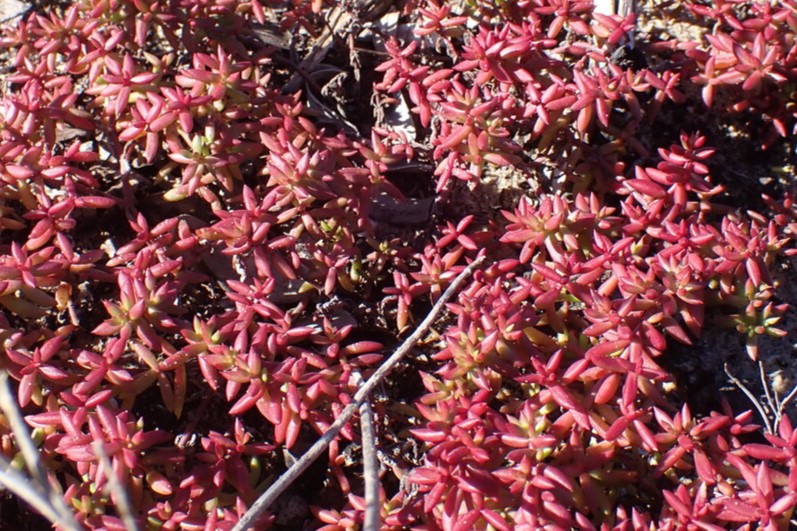
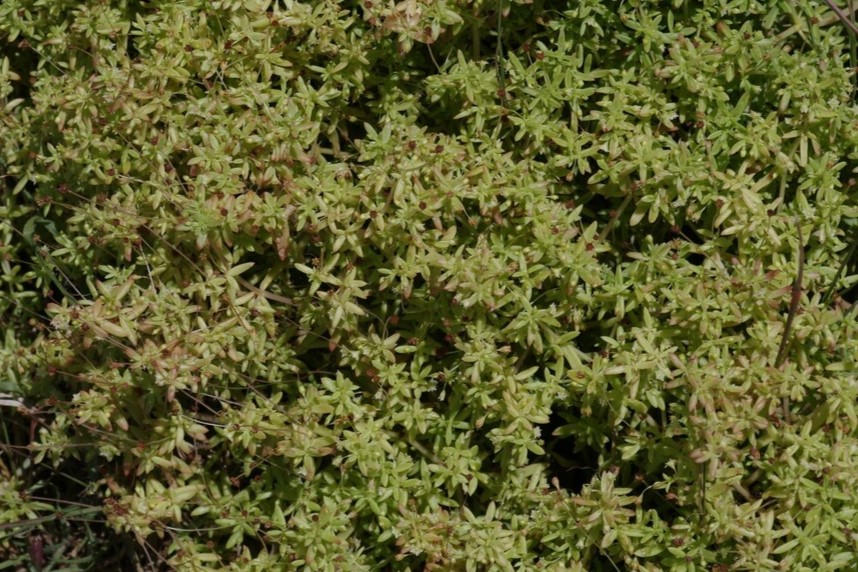
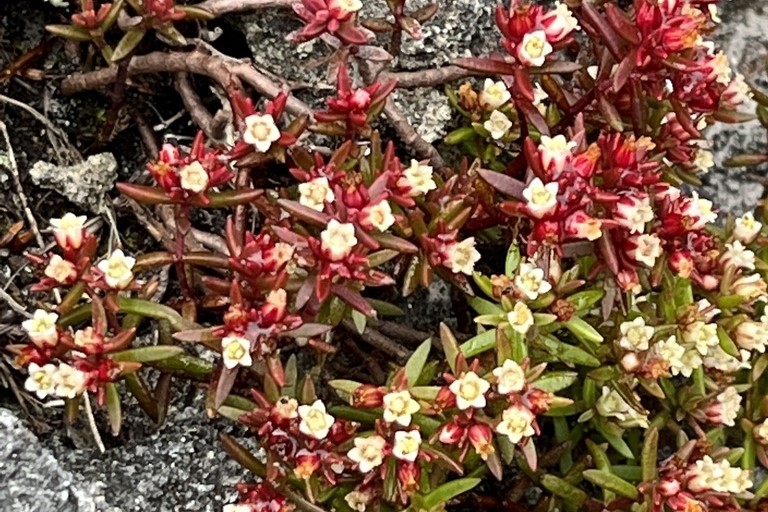
Crassula expansa is a dwarf, soft, sprawling or scrambling succulent, forming loose mats of bright green or red-tinged leaves and slender, fragile stems. It has small, fleshy, oblanceolate to cylindrical leaves, sometimes marked with red lines or spots. Flowers are tiny, white to pinkish, cup-shaped and borne in clusters mostly through spring and summer, but can appear at any time in response to rainfall. The plant breaks easily and pieces root freely, aiding vegetative spread. This species is common from coastal KwaZulu-Natal and Mozambique to the Cape, with subspecies filicaulis and fragilis also present in arid districts and Namibia.
Plant Details
Height
Typically 5–15 cm, rarely exceeding 20 cm, forming dense mats.
Thorns
Absent
Soil
Prefers sandy or loamy, well-drained soils; thrives on rocky outcrops, cliffs, termite mounds, embankments, and disturbed ground.
Fast, especially after rain or in moist shade.
Growth Rate
Typically 5–15 cm, rarely exceeding 20 cm, forming dense mats.
Size
Short-lived perennial, behaving as an annual in hot conditions. Will regenerate from seed and rooting fragments.
Often found with other succulents and xerophytes in winter rainfall zones. Works well with indigenous succulents (Cotyledon, Aloe), hardy forbs, sedges, and small bulbs in restoration, or rocky gardens. A good groundcover with other Crassula and related mat-forming species.
Flowers attract many small pollinating insects, including solitary bees, tiny beetles, and flies. Dense mats shelter small insects and spiders.
Non-nitrogen-fixing; acts as a nurse plant and pioneer. Provides microhabitat for seedlings in harsh environments by covering bare soils and sheltering germinating succulents and forbs.
Rapid colonizer for slope stabilization, restoration of degraded sandy/rocky areas, and moisture retention in shallow soils.
Flowers and fruits
Small white flowers open and close rapidly in response to moisture changes. These provide nectar for small solitary bees, beetles, and flies.
Tiny seeds are dispersed by wind, rain, or gravity. Seeds remains viable in soil, aiding re-establishment after disturbance.
Birds
No records of direct use by birds, but insect abundance can enhance foraging for some insectivorous birds in coastal gardens.
By Seeds:
Sow fine seed on moist sandy or loamy soil after rains or in spring. Quick germination with warmth and light. Seeds remain viable and germinate readily when conditions improve.
By Cuttings:
Stem, leaf, or mat fragment cuttings root very easily when placed on moist, sandy soil; this vegetative propagation is key to its spread in the wild.
Traditional Uses
Traditional medicines: no known documented uses of the plant
Landscaping: Highly valued for fast-growing, delicate-looking but vigorous groundcover that thrives in semi-shade and dry, shady areas under trees where few other plants grow. Its soft, sprawling mats of bright green or reddish leaves provide excellent texture and visual contrast.