Raasblaar, Fluisterboom
umbondwe wasembudwini
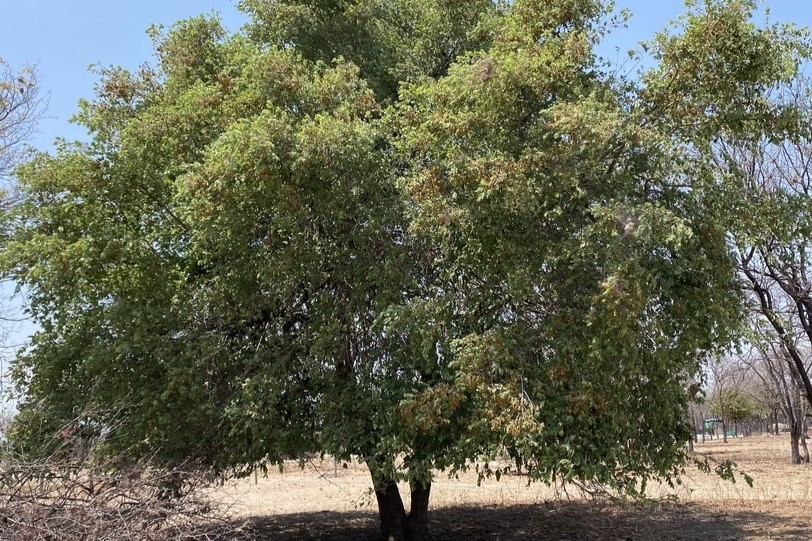
Small to medium deciduous tree, 10–15 m tall, rounded crown, smooth whitish bark. Leaves elliptic, soft, clustered, velvety when young.
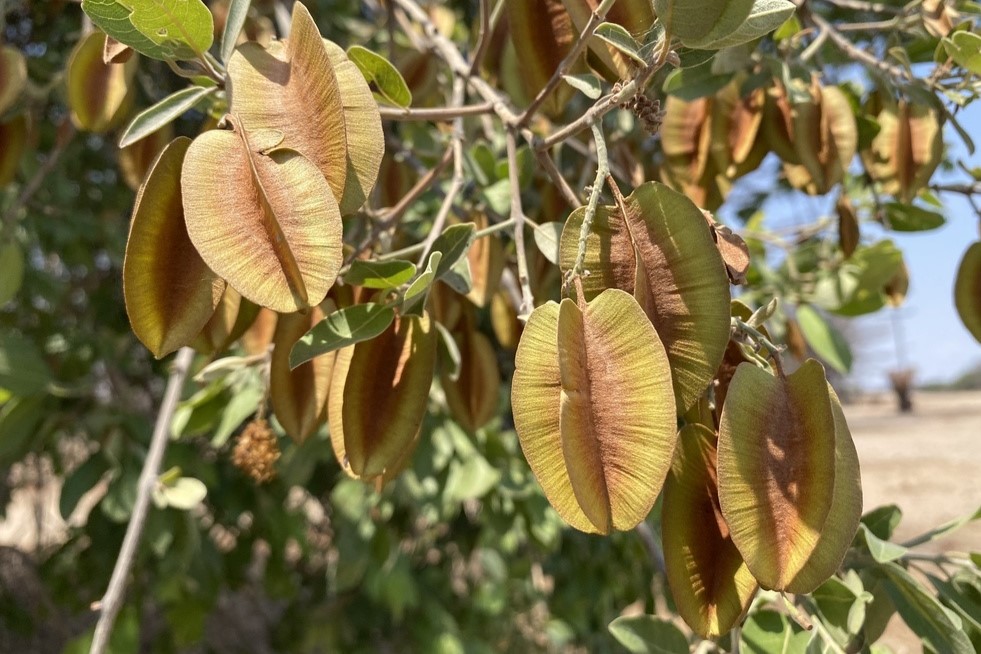
Greenish-yellow, scented flowers. Large, four-winged orange-brown fruits up to 8 cm.
Prominent in bushveld and woodland, an indicator in sour veld.
Key resource for pollinators, frugivores, browsers, and restoration species.
Insects: supports a wide range of insects through its richly scented flowers, large fruit, and role as a host plant in the savanna and woodland ecosystems.
The tree’s structure, foliage, and bark provide shelter and microhabitats for a variety of insects, contributing to the diversity and stability of bushveld and woodland arthropod communities.
Many seeds of C. zeyheri can be parasitized by insects, impacting both seed viability and offering further ecological interactions within the insect community.
Soil: Nurse plant; improves structure, not a nitrogen fixer. Important for soil stabilization and nutrient cycling.
Wildlife: Fruits browsed by elephant, kudu, baboon, and giraffe. Shelter and nesting for birds; canopy for small mammals and reptiles.
Ecosystem Services: Restoration, erosion control, water cycling, bushveld indicator.
Pollination
The flowers appear in spring before the leaves and are arranged in spikes, with a strong sweet scent that draws in bees, butterflies, moths, and various beetles.
The presence of a well-developed nectar disc at the base of the flower encourages visits from these nectar-seeking insects, ensuring cross-pollination.
Seed Dispersal
The fruit is large, orange-brown when dry, and four-winged (a samara), typical of the genus Combretum.
Wind Dispersal: The winged fruit is adapted for wind dispersal; the wings help the fruit glide and tumble away from the parent tree, often covering considerable distance over open ground.
Animal Dispersal: Baboons and hornbills consume the fruits and seeds, aiding in further dispersal through endozoochory (passing seeds through the digestive tract) and mechanical dispersal when birds drop or discard seeds away from the tree.
Parasitism Impact: Many seeds are parasitized by insects before dispersal, reducing seed viability but providing further interaction within the ecosystem.
Thus, C. zeyheri relies on insects for pollination and a combination of wind and animals (especially birds and mammals) for seed dispersal, contributing to its ecological success in African savannas
Fruit Eaters and Seed Dispersers
Hornbills: Hornbill species (genus Tockus) are documented as major consumers of C. zeyheri fruit, feeding on the large, ripe, winged fruits and aiding in seed dispersal by dropping or discarding seeds in new locations.
Other frugivorous birds: Various birds in the bushveld and woodland habitat, including starlings and bulbuls, may also consume the fruits, especially when they fall to the ground or remain accessible on the tree.
Nesting and Habitat Support: provides shelter and nesting sites for multiple bird species by virtue of its broad crown and complex branch structure, making it an attractive location for indigenous birds during breeding season.
Mistletoe Dispersal: Combretum zeyheri often hosts mistletoe plants (e.g., Tapinanthus natalitius ssp. zeyheri, Viscum combreticola), whose fruits are dispersed almost exclusively by birds such as barbets (e.g., Tinker Barbet), starlings, and bulbuls. These birds feed on mistletoe berries and regurgitate seeds that lodge in the branches of bushwillows, leading to new mistletoe infestations and further ecological links.

Propagation by Seed
Collecting and Preparing Seeds: Use fully mature fruits (large, orange-brown and dry) collected in late summer to early autumn. Cut off the wings with scissors or manually open the fruit to remove the seed; scarification (gently nicking with sandpaper) can improve germination rates.
Soaking: Soak cleaned seeds in cold or warm water for 10–12 hours to soften the coat.
Sowing: Plant seeds in seedling trays with a well-drained, sandy-loam and compost mix. Cover lightly with soil or sand; do not bury seeds deeply.
Germination: Keep trays moist (not waterlogged) and place them in a warm, shaded spot. Germination can be erratic, ranging from 11–29 days (or up to several months); expect 0–70% germination. The first true shoot emerges after 4–10 weeks.
Seedling Care: Leave seedlings in trays for their first growing season; transplant to containers in the second year. Young plants are sensitive to drought and frost, so protect them for 3–5 years.
Transplanting: Plant out strong saplings after 3+ years in well-drained, sunny locations
Propagation by Cuttings
Timing: Collect semi-hardwood cuttings (4–6 inches/10–15 cm long) from healthy mature plants during spring or early summer.
Preparation: Remove lower leaves and dip the cut end into rooting hormone to promote root development.
Planting: Insert cuttings into a well-drained potting mix (e.g., sand/perlite or sand/loam combo). Use a humidity dome or cover with a plastic bag to retain moisture and warmth.
Rooting: Place the cuttings in filtered light (not direct sun) and keep the medium moist, not soggy. Roots usually form within 4–8 weeks.
Aftercare: Transplant rooted cuttings into individual containers, gradually move them to more light, and eventually plant into the landscape once strong and growing.
Traditional: Roots used for baskets, fishing traps, necklaces; wood for fencing, timber. Roots and leaves medicinal for nosebleeds, kidney pain, gallstones, eye treatments, haemorrhoids. Gum antibiotic. No toxicity reported for humans/livestock. Contains tannins, bioactive phenolics. Wild browsers consume foliage, livestock avoid. Cultural shade tree; valued for ecosystem role and symbolic uses.
Historical Uses: Combretum zeyheri has long been valued for its durable roots and wood, which are used in basket-making, fishing traps, and necklaces for young girls. The stems are sometimes treated and used as fencing posts and general-purpose timber on the farm, due to their termite and borer resistance. The tree also serves as a shade provider and is recognized by cattle farmers as an indicator of sour bushveld.
Ethnomedicinal Uses: The roots of Combretum zeyheri are pounded and mixed with fat to form ointments for the topical treatment of haemorrhoids, and root powders taken in porridge are used for nosebleeds and kidney pain. Leaf extracts mixed with oil are rubbed on the body to relieve pain and stiffness, while crushed leaves in water are used as an eye lotion. Bark preparations serve in the treatment of gallstones, and root infusions are taken for diarrhoea and excessive menstrual flow, including bloody diarrhoea in certain regions. These wide-ranging uses reflect the versatility and deep knowledge of this species in traditional healthcare.
Toxicity: No substantial toxicity for humans or livestock has been reported for Combretum zeyheri. All major traditional uses, including ingestion and topical application, suggest the species is generally safe under typical use cases.
Pharmacological Action: Scientific research has shown that alkaloid extracts from the leaves of Combretum zeyheri have strong antimycobacterial activity, particularly against Mycobacterium species, with an MIC of 125 μg/mL, as well as time- and concentration-dependent bactericidal effects. The extracts may also inhibit bacterial efflux pumps, a mechanism contributing to their medicinal efficacy. Other studies document antibacterial, antifungal, antituberculosis, and anticancer effects, with notable activity against Jurkat T and HL-60 cancer lines.
Bioactive Phytochemicals: Key compounds identified in Combretum zeyheri include bibenzyls, combretastatins (A-4 and B-1), tannins, and phenolics. Combretastatin A-4 is a potent inhibitor of cancer cell growth and tubulin polymerization, subject to multiple patents for its biomedical applications. Edible gum secreted from fruit and seeds contains tannins and is considered a delicacy by pastoralist communities.
Livestock & Fodder: Although not a preferred food source for livestock, Combretum zeyheri leaves are browsed by wild herbivores such as giraffe (Giraffa camelopardalis) and elephant (Loxodonta africana), and ripe seeds are eaten by baboons (Papio cynocephalus) and hornbills (Tockus spp.). Livestock avoid the tree, but its ecological presence is valued.
Cultural Significance: Valued culturally for its shade, practical uses in crafts, and symbolism as an indicator plant of sour veld by farmers. The edible gum is a sought-after delicacy, and the tree has a respected place in rural landscapes and medicinal traditions, often used in ceremonies and daily life.