Hardekool
umbondwe omnyama
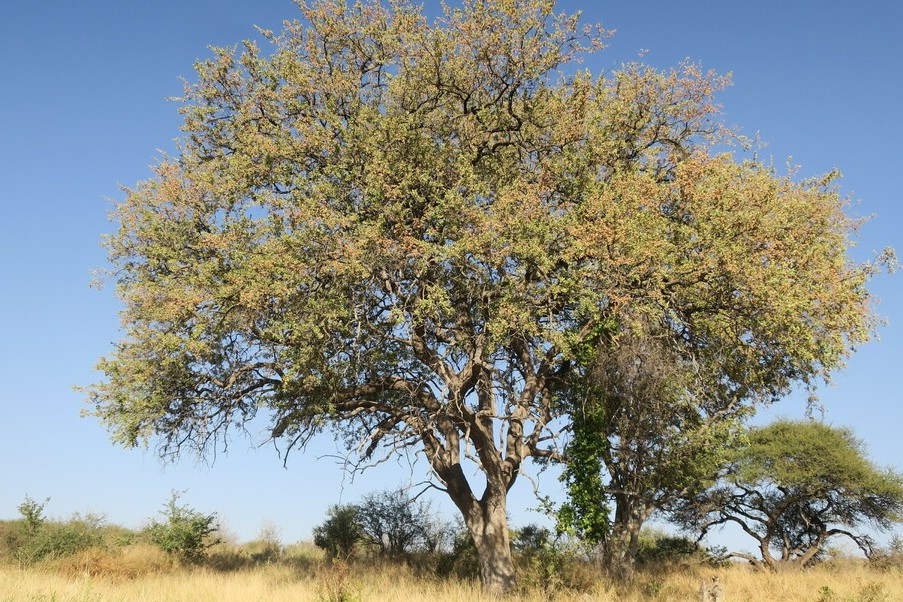
Combretum imberbe, commonly known as Leadwood, is a striking, slow-growing, and long-lived tree native to the savannas and woodlands of southern and eastern Africa. Mature trees often reach heights of up to 20 meters and can live for over a thousand years, making Leadwood one of the region’s oldest living plant species. Its sparse, spreading canopy and distinctive pale grey, deeply fissured “snakeskin” bark make it highly identifiable throughout the year.
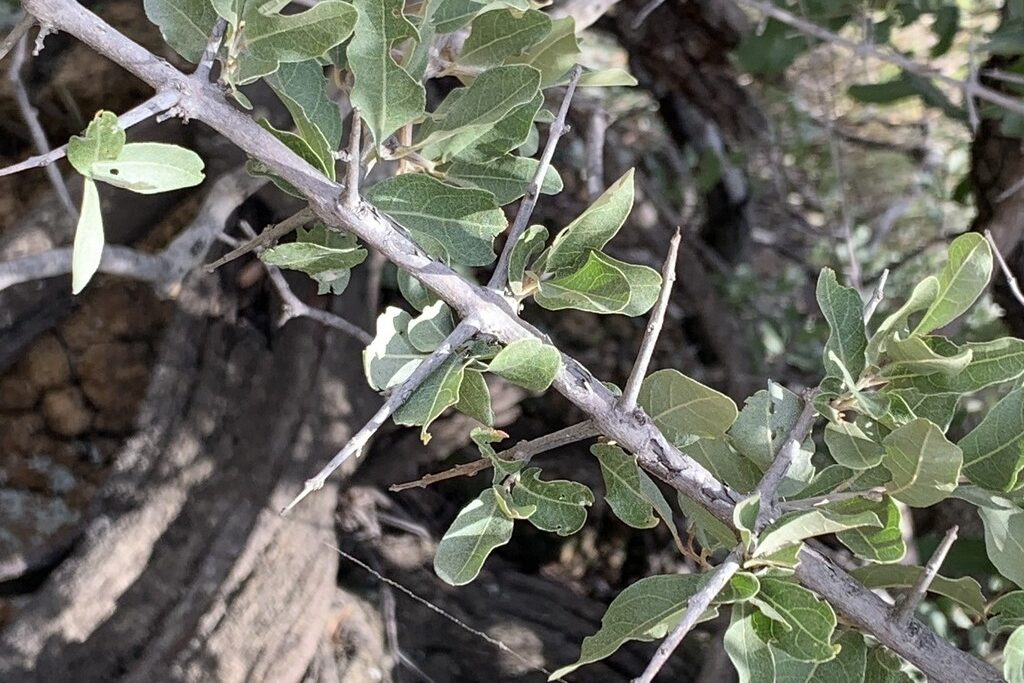
Leadwood is semi-deciduous with opposite, elliptic-oblong leaves that are thick, leathery, and typically grey-green above with a paler underside. The bark is uniquely pale grey or white and broken into rectangular plates, while branchlets are stiff and sometimes spine-tipped. Dead branches often remain on mature trees.
The tree produces fragrant, cream or yellowish-white flowers in dense spikes from November to March, attracting numerous insect pollinators.
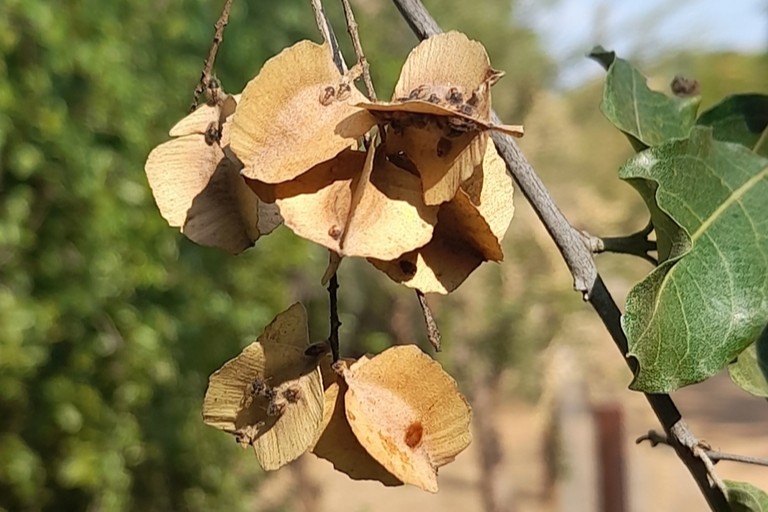
Fruits are small, D-shaped, four-winged, yellow-green when immature and brown at maturity, ripening from February to August; the seeds are dispersed mainly by wind.
Due to its slow growth and exploitation for wood, Combretum imberbe is protected by law in parts of southern Africa.
In environmental terms, its deep roots stabilize erosion-prone soils along riverbanks.
Ecologically, Leadwood is vital for wildlife:
Insects: provide nectar, pollen, and habitat through the flowers and structure. The flowers attract a wide variety of insects, including pollinators such as bees, butterflies, moths, flies, and wasps.
The tree’s rough bark and large canopy also offer shelter and breeding sites for various insects throughout the year, contributing to the biodiversity of woodland environments.
Mammals: leaves are browsed by elephants, giraffes, kudus, impala, and other animals.
Birds: provide nesting sites for birds such as parrots and hornbills.
Flower Resources: The copious nectar and pollen of the flowers attract a myriad of insects during the flowering period, making the tree a significant food source for nectar-feeding insects in bushveld and woodland ecosystems.
Pollinator Habitat: By giving insects access to nectar and pollen, Combretum imberbe helps maintain healthy populations of insect pollinators in its habitat.
Seed Dispersal: Seeds are dispersed by wind (anemochory), using their distinctive four-winged fruits to travel up to 50 meters from the parent tree. The fruits do not spin consistently but tumble through the air, which helps spread seeds widely and potentially avoids ground fires by delaying fruit release into the next season.
Seed germination rates in the wild are very low (3–5%), and natural seedling survival is poor.
Provides shelter for birds.
Insectivorous birds feed on insects visiting the flowers or living in the fissured bark.
Seed Selection & Preparation: Use healthy fruits; remove seeds carefully to avoid damage. Soak seeds in warm (not boiling) water for 12–24 hours to soften the outer layer and improve absorption.
Sowing: Press seeds into trays filled with well-draining river sand or loam. Cover lightly with a thin layer of sand or soil. Seeds should not be planted too deep.
Moisture & Light: Keep the medium moist (not wet). Place trays in a bright, sunny location; full sun is best.
Germination: Seeds typically germinate in 1–2 weeks, but germination rates are low (3–5%).
Transplanting: At the second leaf stage, transplant seedlings to nursery bags. Protect young seedlings from frost and herbivory.
Tips: Sow extra seeds due to high mortality and poor germination. Avoid overwatering as seedlings are prone to damping off.
Difficult; mainly propagated by seed.
Timing: Take semi-hardwood cuttings during the active growing season (spring or early summer).
Preparation: Use healthy, disease-free stems. Allow wounds to callous and dip in rooting hormone (optional).
Rooting Medium: Place cuttings in sterile, well-drained river sand or a mix of sand and perlite; keep humid but not waterlogged.
Aftercare: Place in a bright, warm location protected from direct sun. Maintain humidity until rooted, then gradually harden off.
Coppicing: Trees can resprout from cut stems; for best results, cut at about 1 m above ground to encourage vigorous new growth and avoid fire/herbivore damage.
The wood is exceptionally hard, dense, dark brown, and heavy—so dense it sinks in water and is essentially termite- and borer-proof, making dead Leadwood trees persistent fixtures in the landscape for centuries. Its heartwood is valued for heavy construction, carving, and furniture. Traditionally, the tree is also used in rituals and as a charm for protective purposes, and several plant parts are employed in medicinal practices as anthelmintics and wound treatments.
Traditional Uses: Various parts of the tree are used as charms and in rituals for protective purposes. The bark, roots, root bark, stems, and leaves are employed against ailments such as bilharzia, erectile dysfunction, fever, malaria, menstrual problems, infertility, pregnancy troubles, neuralgia, respiratory infections, sexually transmitted infections, skin problems, toothache, and gastrointestinal issues. The bark is used for tanning, and its ash for toothpaste.
It holds significant cultural value among local peoples such as the Herero and Ovambo, who regard it as an ancestral tree and attach ritualistic importance to its presence.
Medicinal Applications: The smoke from burning leaves relieves coughs, colds, and chest complaints. Leaf or root decoctions are used as enemas for constipation and drunk for stomach aches, chest pain, colds, and infertility. Bark powder is applied externally for leprosy, and root infusions are taken for schistosomiasis and menstrual troubles. Leaf and root teas also serve as fever or malaria treatments, and the edible gum is sometimes consumed.
Antibacterial, Antimycobacterial, and Antifungal: Extracts from C. imberbe possess strong antibacterial activity—especially against Staphylococcus aureus, Mycobacterium fortuitum, Escherichia coli, and other pathogens—supporting its use for infections, respiratory, and chest complaints. Some compounds also inhibit growth and efflux mechanisms in pathogenic mycobacteria.
Anti-inflammatory and Antioxidant: Both leaf and bark extracts demonstrate anti-inflammatory and antioxidant activities in laboratory studies, which underpin their traditional uses for fever, pain, and infections.
Antischistosomal and Cytotoxic: Extracts exhibited activity against schistosomiasis (a parasitic disease) and displayed cytotoxic, anti-proliferative properties on certain cell lines—potentially valuable for future therapeutic research.
Phytochemistry: Key compounds include amino acids, flavonoids, polyphenolics, tannins, and triterpenoids (e.g. imberbic acid, various pentacyclic triterpenoids), which are responsible for these biological effects.
Both ethnomedicinal knowledge and modern pharmacological results confirm Combretum imberbe’s use as an antibacterial, anti-inflammatory, antifungal, and antiparasitic agent; detailed clinical evaluation is still required to realize its full therapeutic potential