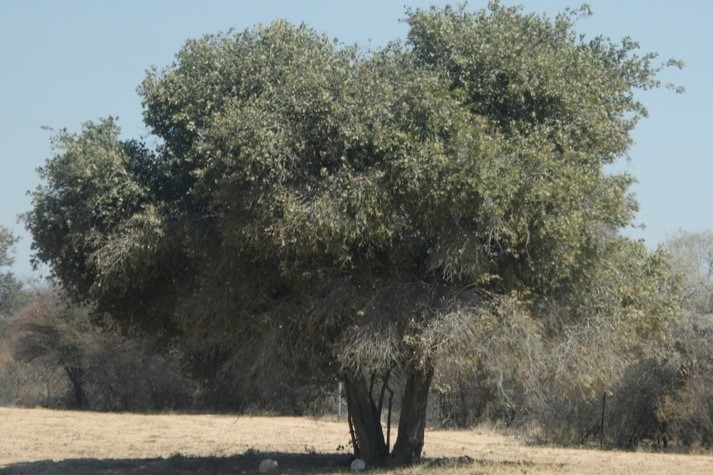
Combretum hereroense is a semi-deciduous, drought-resistant shrub or small tree, typically 3-12 meters tall, with a short, crooked stem and thick, corky, greyish bark that flakes in strips.
The leaves are simple, elliptic or obovate, glabrous above and velvety below, resembling mouse ears.
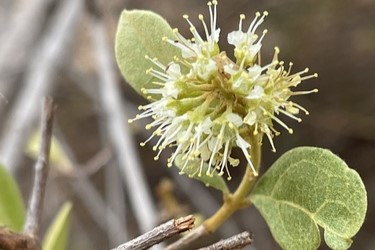
In spring, it produces dense spikes of creamy white to yellowish, sweet-scented flowers, often before new foliage appears.
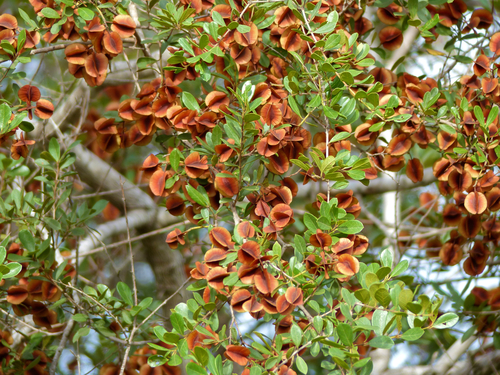
The tree bears distinctive, rich reddish-brown, four-winged samara fruits in late summer and winter.
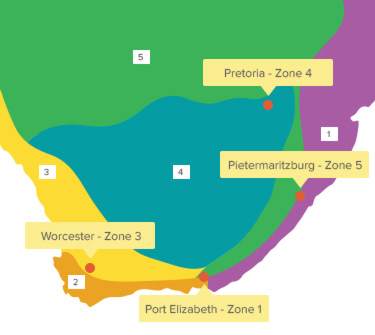
It is widespread in dry, open bushland, mopane woodlands, and along riverbanks and rocky slopes in eastern and southern Africa.
Plant Details
Height
3-12 meters
Thorns
None
Soil
Sandy or silty, well-drained soils; tolerates poor and rocky soils
Suitable for bushveld and mopane woodland plantings; combines well with drought-tolerant shrubs and trees.
Caterpillars
Associations
Descriptions
Insects: The flowers attract bees, butterflies, and other pollinators.
Birds: The fruits are eaten by birds and small mammals, aiding seed dispersal.
The dense foliage provides shelter for birds and insects, and the tree supports a variety of invertebrates.
Soils: It is valuable for stabilizing soils and providing habitat in dry, open landscapes.
Flowers and fruits
Creamy white to yellowish, sweet-scented flowers in dense spikes; pollinated by insects.
Fruits are four-winged samaras, dispersed by wind and animals.
Birds
Fruits are eaten by birds; dense branches provide nesting and cover.
By Seeds:
Sow fresh seeds in sandy soil; germinates readily.
By Cuttings:
Not commonly used; seed propagation preferred.
Traditional Uses
Wood used for making tools and utensils; bark and roots used in traditional medicine.
Leaves and pods browsed by livestock and game.
Useful for soil stabilization, erosion control, and restoring degraded bushveld and woodland habitats.