Rooiboswilg
umbondwe
Deciduous tree or large shrub with spreading crown.
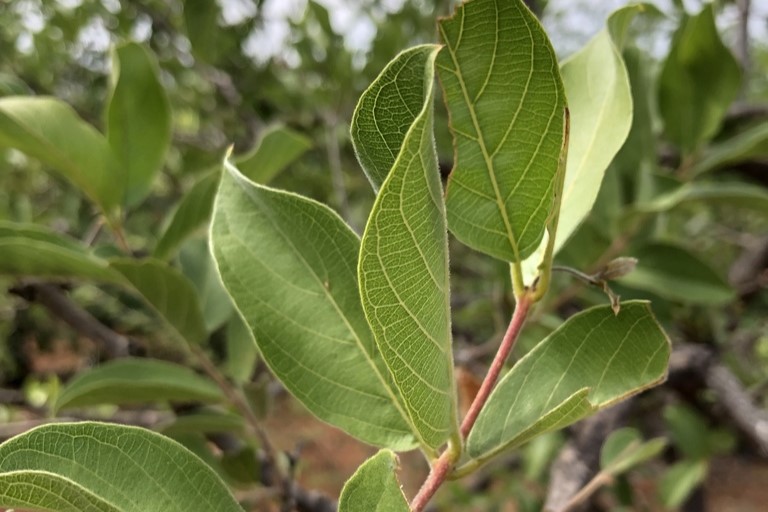
Leaves are simple, ovate, dark green above, paler below.
Flowers are small, yellowish, in dense spikes in late spring.
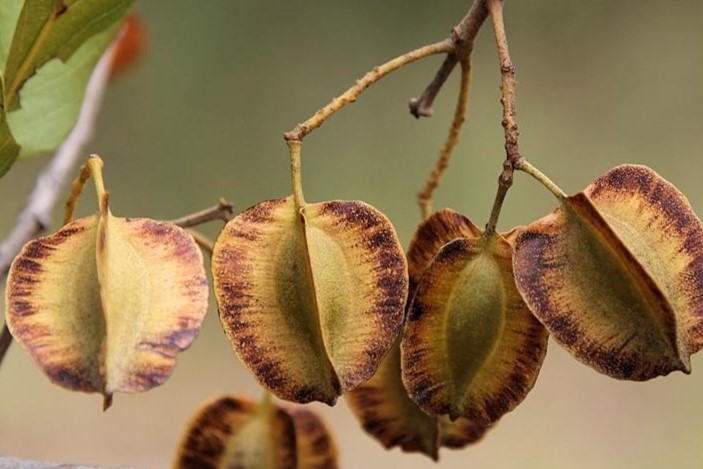
Fruits four-winged samaras, reddish-brown.
Important for browsing wildlife and a the host plant to a range of insects, including >25 species of caterpillars.
Insects: Supports diverse insect fauna including caterpillars of >23 moth and >2 butterfly species. The flowers supply nectar to many pollinators and nectar-feeding insects such as solitary bees, social bees, butterflies, beneficial flies, and wasps.
Ecological: Provides shelter for reptiles and small mammals. Important for soil stabilization.
Large Mammals: The leaves are a favourite among several browsers such as the greater kudu, bushbuck, eland, giraffe, and elephant.
During the wet season, red bushwillow makes up 44% of the female diet and 34% of the male diet in Mopani woodlands. Eland, giraffe and elephants feed on the foliage whenever the trees are in leaf and can cause damage due to heavy feeding. Elephants also browse on the branches. Collectively, they all contribute to ecological pruning.
Domestic Livestock: Cattle consume fallen leaves, especially during dry seasons. Goats browse the foliage.
The seeds of Combretum apiculatum are toxic to most animals. The brown-headed parrot is one of the few animals able to eat the seeds without ill effects, possibly due to unique digestive adaptations.
Flowers attract bees, butterflies, and other nectar or pollen-feeding insects.
Fruits are dispersed by wind and animals.
Provides food for fruit-eating birds. Shelter for a range of birds, and a source of a wide range of insects for insectivorous birds.
Collect seeds when the fruits mature in late summer. Sow fresh or after drying. Germination rates are moderate.
Semi-hardwood cuttings root moderately well under mist.
Traditional Uses:
Timber: The wood is extremely hard and used for making pestles and other tools.
Edible gum: Though not highly valued, the gum is sometimes consumed
Common Traditional medicinal uses: The bark, leaves, roots, and fruits have been employed to treat a variety of ailments, often based on indigenous knowledge passed down through generations.
Gastrointestinal issues: Used for diarrhea, dysentery, and stomach cramps. Fever and malaria: Decoctions help reduce fever and manage malaria symptoms. Respiratory infections: Treats coughs, bronchitis, and other chest conditions. Skin diseases: Applied topically for wounds, rashes, and infections. Wound healing: Applied topically to aid healing and prevent infection. Sexually transmitted infections: Used in some communities for managing STIs. Infertility and bilharzia: Traditional healers use it for reproductive health and parasitic infections.
Detailed studies on the exact seed chemistry leading to the toxicity are limited, but based on related research, it is likely that tannins bind proteins and interfere with digestion and nutrient absorption. Saponins may give the seeds a bitter taste and have potential to cause gastrointestinal irritation. Flavonoids have antibacterial properties but may also contribute to toxicity in high concentrations. Phenolic compounds can be cytotoxic or interfere with metabolic processes, and alkaloids are sometimes associated with neurotoxicity or hepatotoxicity.