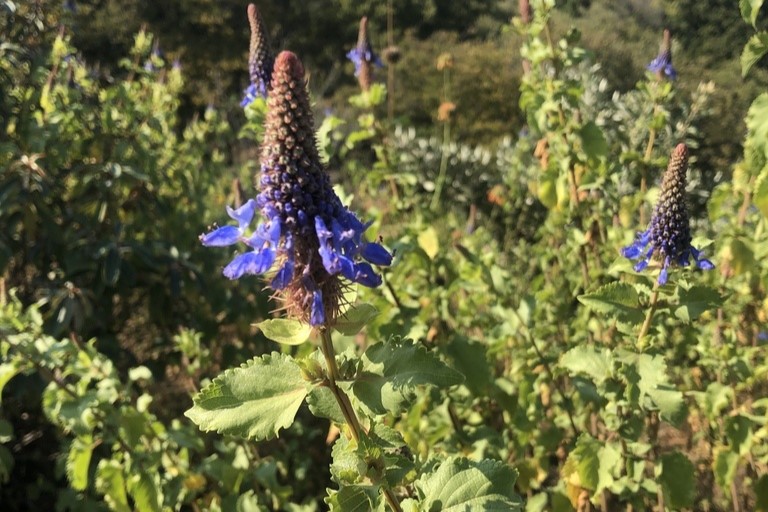
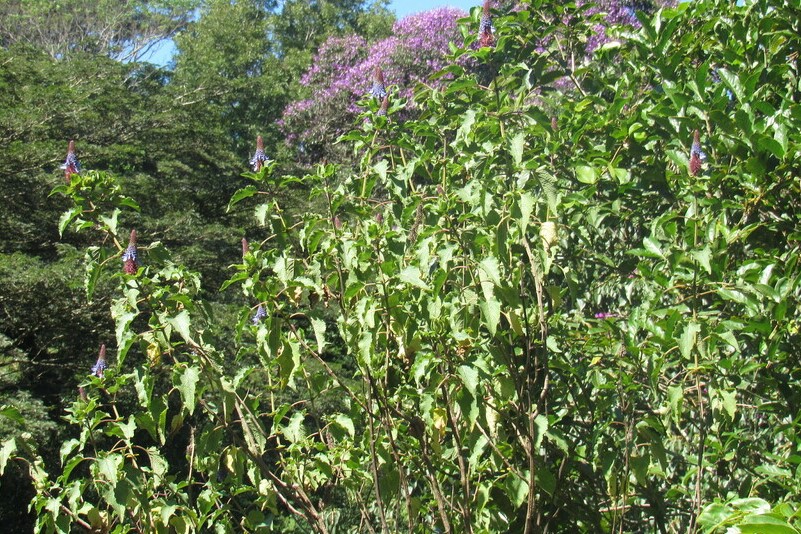
Coleus livingstonei is an erect, aromatic perennial shrub, 1-2.5 m high with a woody base, multi-stemmed and well-branched. Leaves are broad, triangular, and densely hairy, with rounded teeth.
The plant produces dense spikes of mauve to dark blue flowers in late autumn to winter.
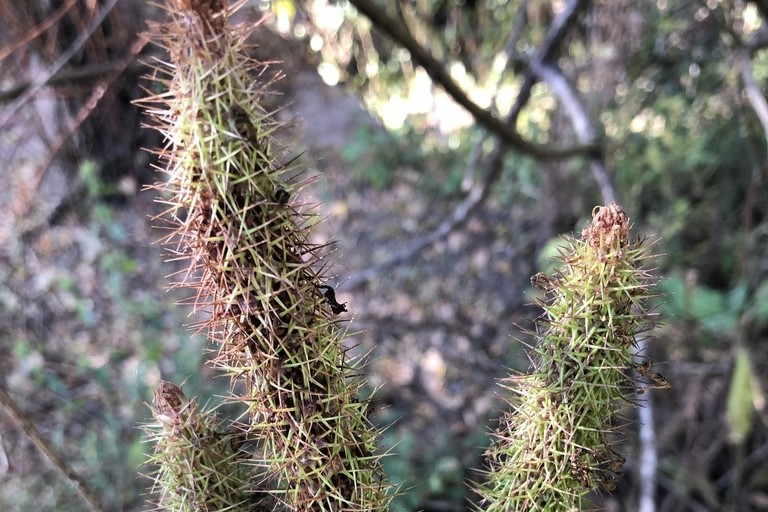
After flowering, the calyx becomes sharp and reddish, giving a prickly appearance.
The plant is best in warm, frost-free areas but tolerates short cold snaps.
Flowers attract bees, butterflies, and other pollinators.
Leaves are food for grasshoppers.
The plant supports pollinator populations and invertebrate diversity in grassland and bushveld habitats.
Flowers and fruits
Dense spikes of blue to mauve flowers in late autumn.
Pollinated by bees, butterflies, and possibly long-tongued flies.
The fruiting calyx is spiky and reddish.
Birds
Indirectly supports insectivorous birds by attracting pollinators and other insects.
Caterpillars feeding on the plant will be food for young birds, other small animals, and adults of small insectivores.
By Seeds:
Collect seeds in winter. Sow in spring or early summer. Seeds germinate readily.
By Cuttings:
Cuttings taken in spring or early summer root easily.
Traditional Uses
No documented medicinal use; aromatic foliage.
Not a primary fodder species.
Suitable for grassland and wetland restoration.
Supports diverse pollinators.