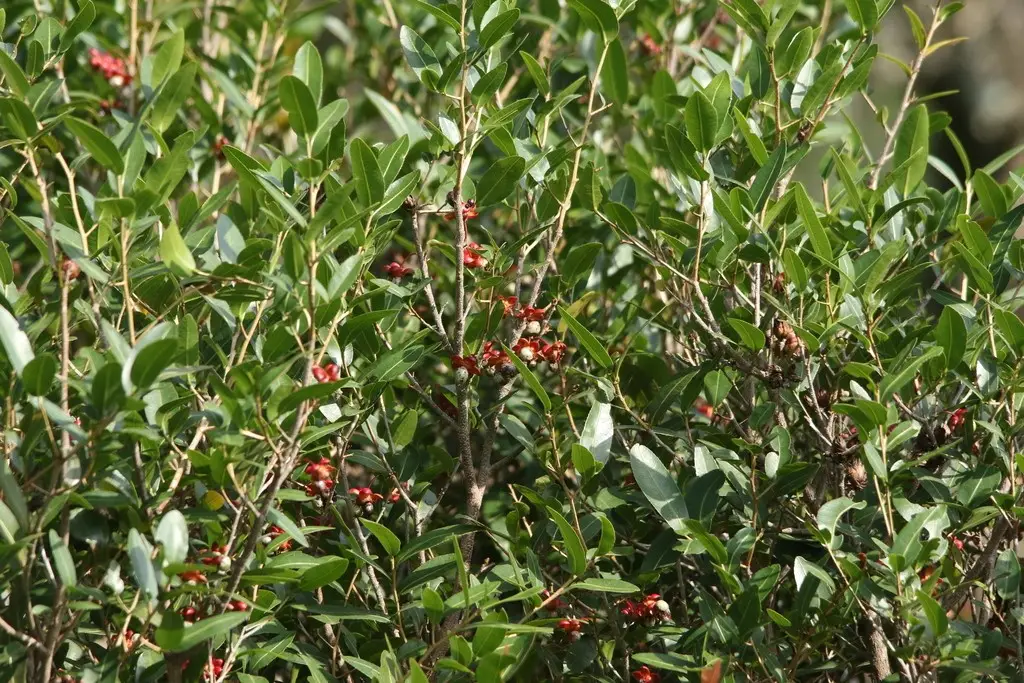
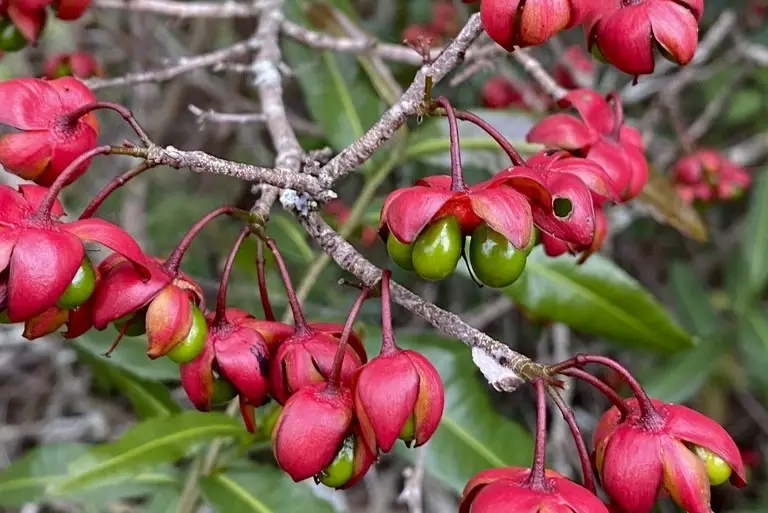
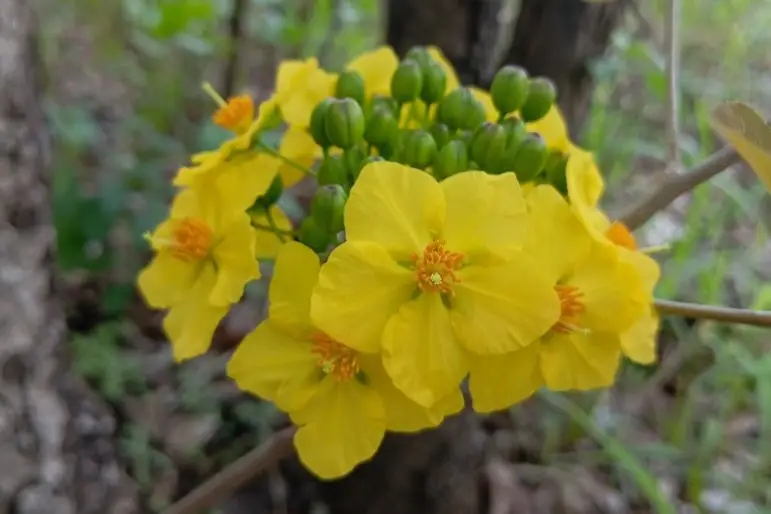
Ochna natalitia is a small, evergreen, multi-stemmed shrub or small tree, typically 2 – 5 meters tall, with dark, rough bark. The leaves are alternate, simple, elliptic, dark green, and often reddish when young. Large, golden yellow flowers are borne in clusters in spring, followed by striking fruit with a bright red calyx and black drupes. The plant is found on rocky outcrops and in bushveld, thriving in well-drained soils.
Suitable for mixed bushveld and rocky outcrop plantings.
Caterpillars
Supports pollinator insects and some Lepidoptera larvae.
Associations
Descriptions
The bright flowers attract bees and butterflies for pollination. The fruits are eaten by birds, which aid in seed dispersal. The plant provides shelter for insects and small animals and contributes to the biodiversity of rocky and bushveld habitats.
Flowers and fruits
Large, golden yellow flowers in clusters; fruits are black drupes with a red calyx, highly attractive to birds.
Birds
Fruits are eaten by birds; flowers attract insectivorous birds through increased insect activity.
By Seeds:
Sow fresh seeds in spring; germination is reliable.
By Cuttings:
Not commonly used; seed propagation preferred.
Traditional Uses
Used in traditional medicine for various ailments.
Not a primary fodder species.
Not known to be toxic.
Useful for soil stabilization, increasing pollinator and bird diversity in restoration projects.