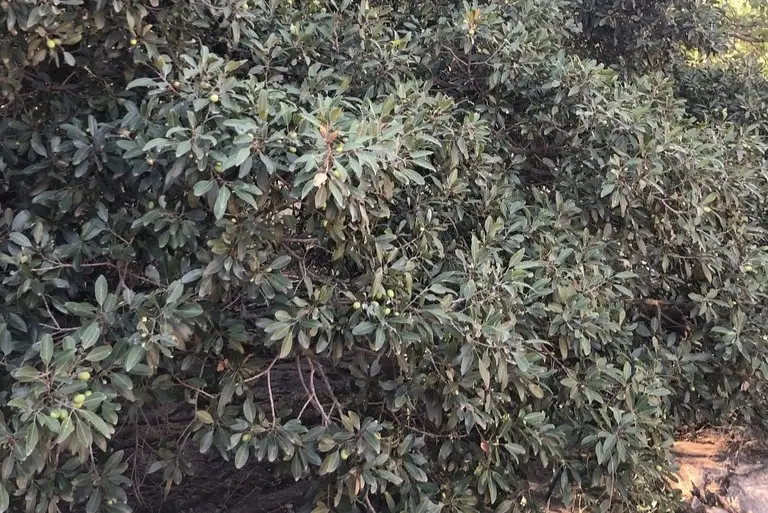
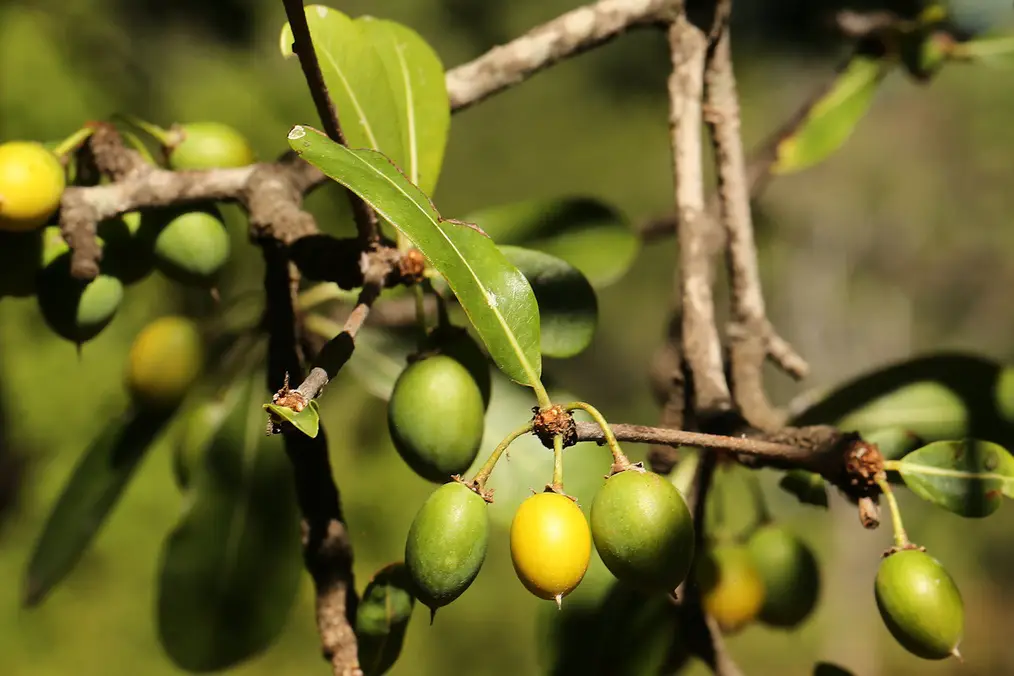
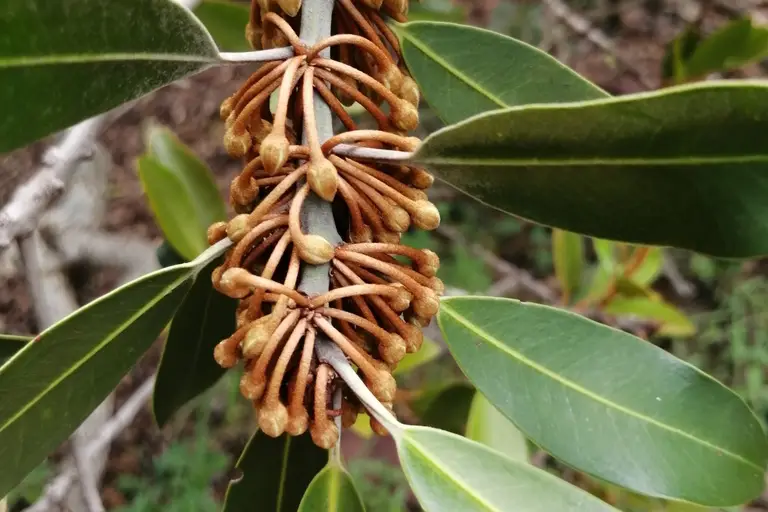
Mimusops zeyheri is a semi-hardy, drought-resistant, evergreen tree with a spreading, densely rounded crown and deeply grooved bark, growing 3 – 11 meters tall. Leaves are simple, alternate, leathery, and glossy, with a velvety under surface when young. Sweetly scented, creamy-white flowers appear in clusters from October to February. The shiny yellow-orange fruit is edible, high in vitamin C, and has a brittle skin. The species is widespread in southern Africa, found in open woodland, bushveld, and rocky slopes.
Plant Details
Height
3 - 11 meters
Thorns
None
Soil
Prefers deep, well-drained soils; tolerates sandy or rocky soils
Combines well with other woodland and bushveld species.
Caterpillars
Host for Boisduval's False Acraea and Pied False Acraea butterfly larvae; supports other Lepidoptera.
Associations
Descriptions
Fruits are eaten by birds, monkeys, baboons, bushpigs, and people, aiding seed dispersal. Leaves are browsed by antelope and elephants. The tree is a larval host for Boisduval’s False Acraea and Pied False Acraea butterflies, and supports a variety of other insects. Dense foliage provides nesting and shelter for birds and small animals.
Flowers and fruits
Creamy-white, sweetly scented flowers pollinated by insects. Fruits are edible, rich in vitamin C, and dispersed by birds and mammals.
Birds
Fruits attract barbets, bulbuls, louries, mousebirds, pigeons, and other frugivorous birds; dense canopy offers nesting sites.
By Seeds:
Sow fresh seeds in well-drained soil; germinates slowly.
By Cuttings:
Not commonly used; seed propagation preferred.
Traditional Uses
Fruit eaten fresh; bark, roots, and leaves used in traditional medicine.
Leaves browsed by game and livestock.
Not known to be toxic.
Useful for food forests, shade, soil stabilization, and supporting wildlife diversity.