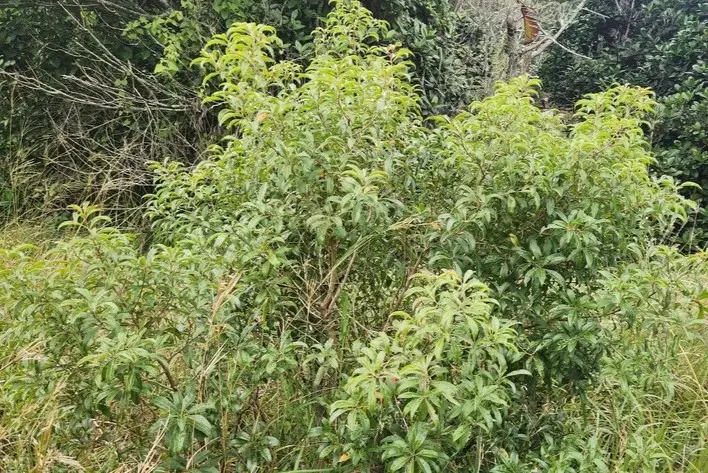
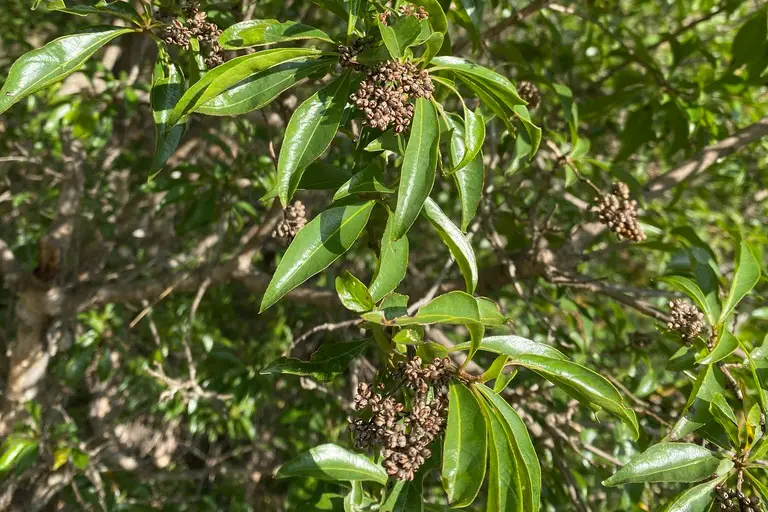
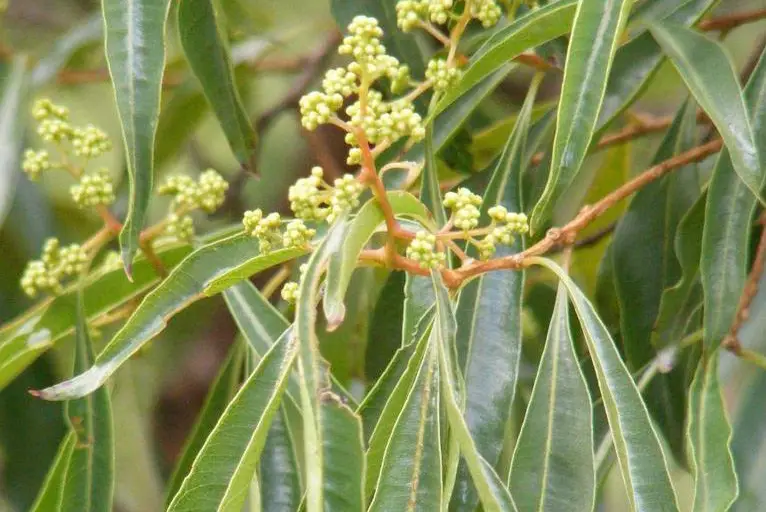
Small to medium deciduous tree, 4 – 10 m tall, with slender, upright, narrow form and drooping foliage. Bark is pale grey to creamy with apricot-colored patches, flaking in large scales. Leaves are alternate, narrowly elliptic, shiny dark green above, paler below, with a strong lavender scent when crushed. Flowers small (3 mm), yellowish-green, sweetly scented, borne in branched terminal clusters in summer (Dec – Mar). Fruits small, brown oval capsules appearing Mar – May, splitting into valves to release numerous seeds; old capsules often remain on tree for months. Attractive autumn foliage turning red or purple.
Plant Details
Height
4 - 10 m
Thorns
Absent
Soil
Well-drained soils; adaptable to various soil types including sandy and loamy.
Associated with Acacia, Combretum, Terminalia species in bushveld and woodland.
Caterpillars
Supports various butterfly and moth species attracted to flowers.
Associations
Descriptions
Flowers attract bees, wasps, butterflies; bark and leaves browsed by black rhino; fruits eaten by birds and mammals; supports insect biodiversity.
Flowers and fruits
Small yellowish-green flowers, sweetly scented; small brown capsules with many seeds dispersed by splitting valves.
Birds
Nectar source for pollinators; fruits eaten by frugivorous birds; provides shelter.
By Seeds:
Sow fresh seeds in well-drained soil; seeds germinate readily; sow in spring; seeds are very small, cover lightly.
By Cuttings:
Possible but low success; semi-hardwood cuttings with rooting hormone recommended.
Traditional Uses
Leaves used for herbal tea and potpourri; roots and leaves used medicinally for bleeding gums, mental disorders, and as insect repellent; wood used for fencing and charcoal; bark and leaves browsed by black rhino.