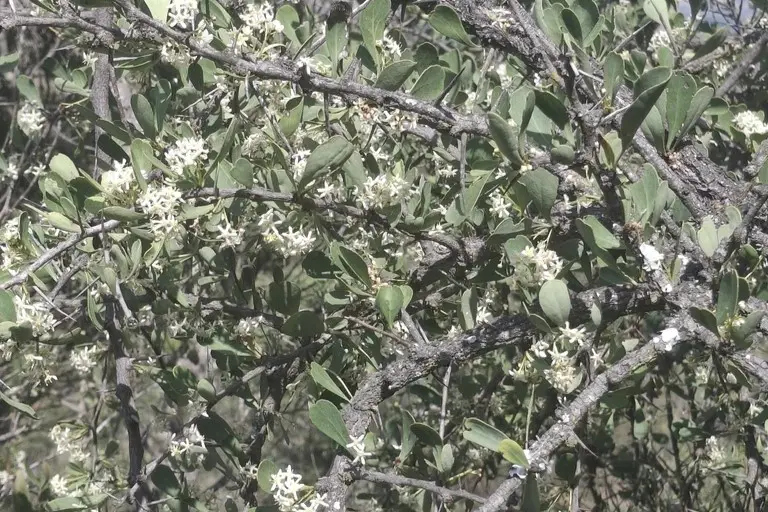
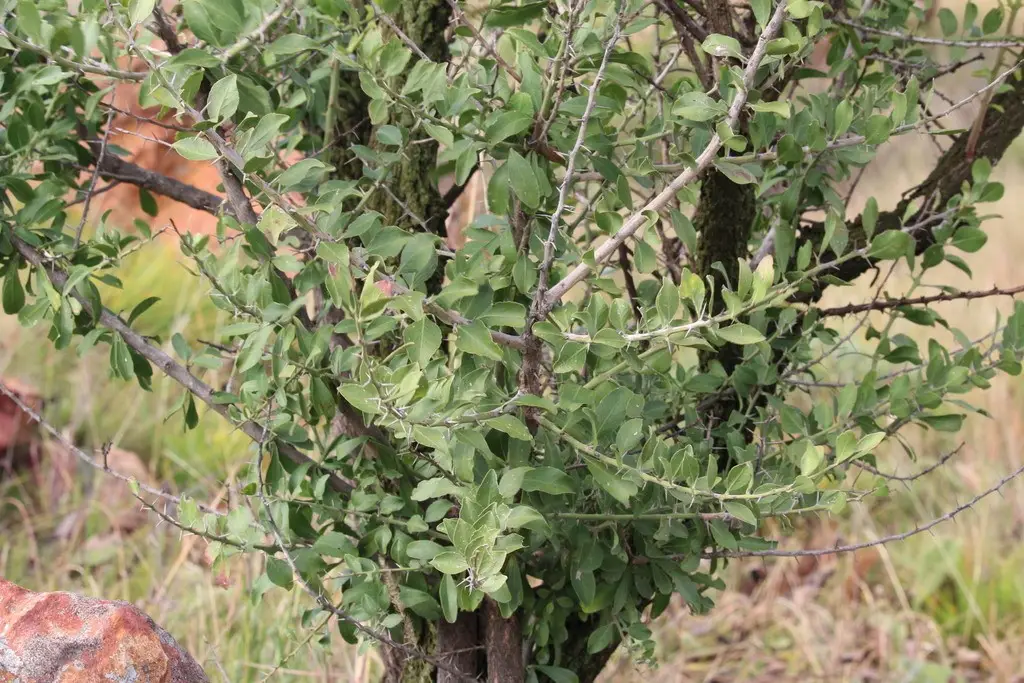
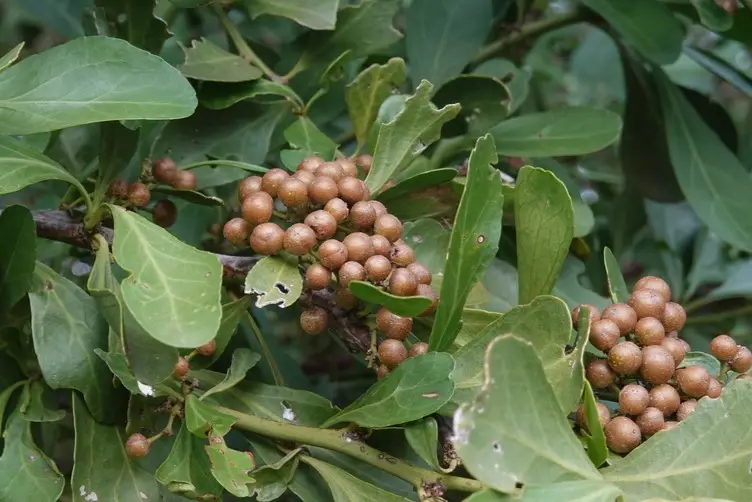
Gymnosporia buxifolia is a hardy, drought-resistant, semi-deciduous shrub or small tree, usually 2 – 6 meters tall, with pale grey to black, rough, deeply grooved bark and long, straight spines. The leaves are glossy, dark to lemon green, with a variable form and toothed edge. Small, white, sweetly scented flowers appear in dense clusters from August to March, followed by round, leathery capsules containing seeds partly covered by a yellow aril. It is widespread in southern Africa, found in grasslands, thickets, forests, and savanna-bushveld, often on hillsides or rocky slopes.
Suitable for mixed bushveld and grassland plantings; often found with other drought-tolerant shrubs and trees.
Caterpillars
Host for larvae of Sicyodes cambogiaria and other Lepidoptera.
Associations
Descriptions
Flowers attract a variety of insects, including bees, flies, and butterflies, supporting pollinator populations. The dense, thorny branches provide nesting sites and shelter for birds and small mammals. The plant is a larval host for some butterfly species and supports insect diversity, which in turn supports nesting birds.
Flowers and fruits
Small, white, sweetly scented flowers attract pollinators. The round capsules split open on the tree to reveal seeds with a yellow aril, which are eaten by birds, aiding seed dispersal.
Birds
Fruits are eaten by birds; the dense, thorny structure offers protection and nesting sites.
By Seeds:
Sow fresh seeds in sandy, well-drained soil; germinates readily.
By Cuttings:
Not commonly used; seed propagation preferred.
Traditional Uses
Used for treating pleurisy, chest colds, coughs, diarrhoea, and snakebite; wood used for utensils and tools.
Not a primary fodder species; seeds not edible to humans or livestock.
Said to be poisonous; caution advised.
Useful for hedges, windbreaks, and restoration of degraded land, supporting biodiversity and soil stabilization.