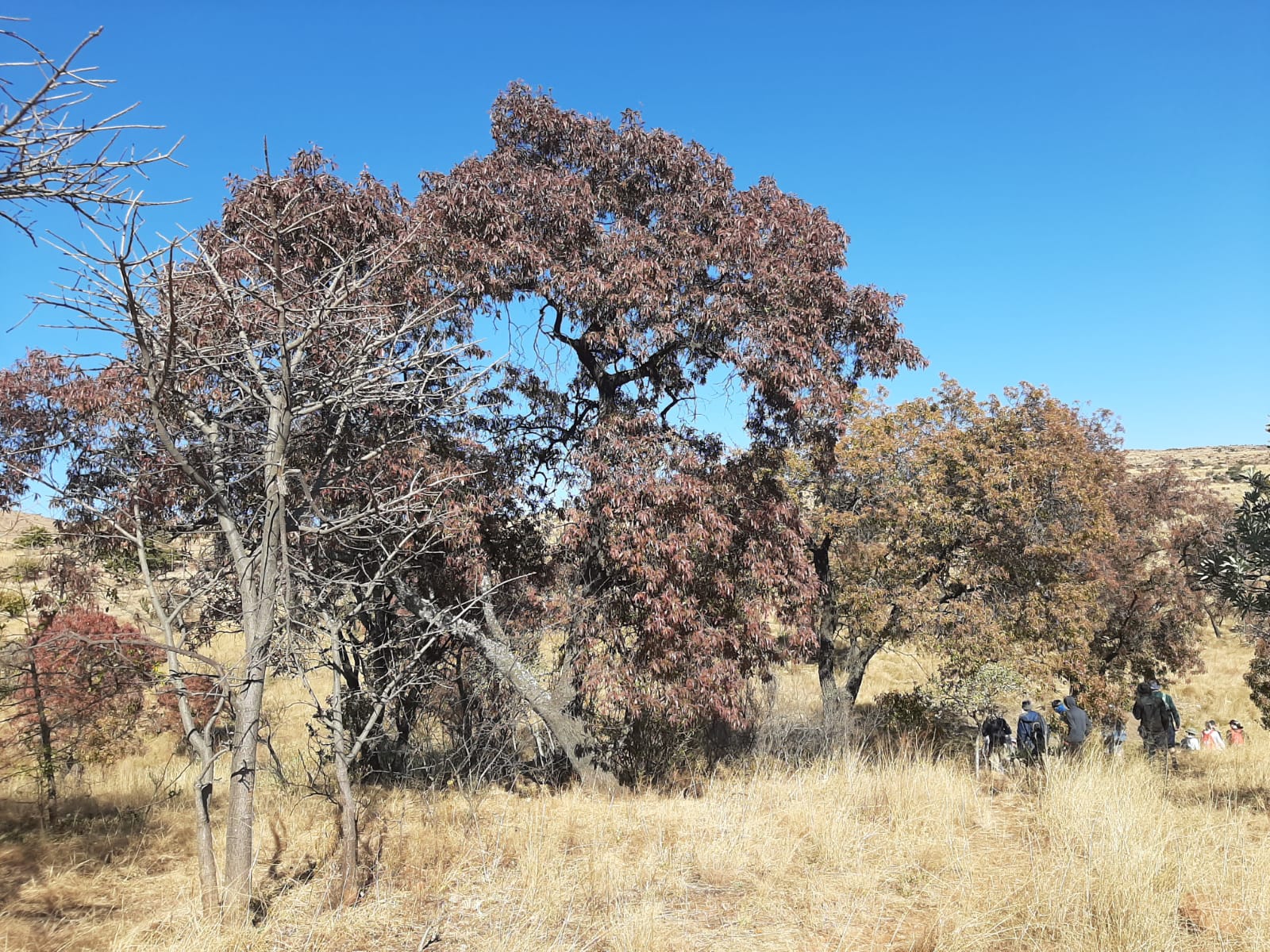
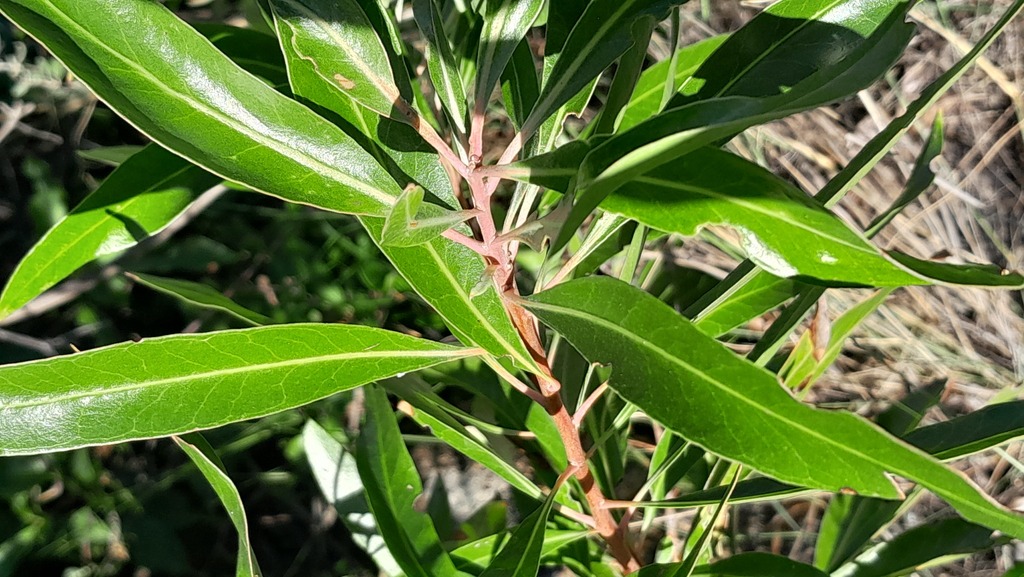
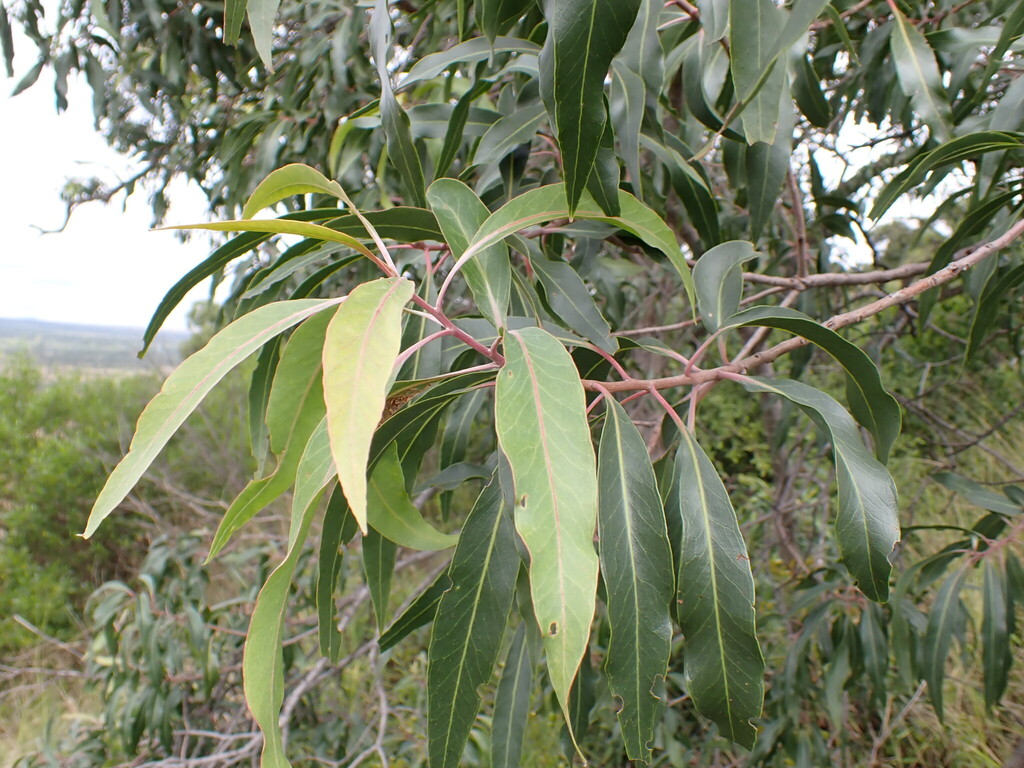
Faurea saligna is a graceful, semi-deciduous tree, typically 8 – 15 meters tall, with rough, dark-grey to black, deeply fissured bark. The narrow, drooping leaves resemble those of a willow. It is found in open woodland, stony hillsides, and along riverbanks, often in large clumps. The tree is common in the bushveld and lowveld of southern Africa, thriving in sandy or red loam soils.
Plant Details
Height
8 - 15 meters (up to 20 meters in forests)
Thorns
None
Soil
Prefers sandy or red loam soils; found on stony slopes
Pairs well with other woodland and riparian species.
Caterpillars
Supports pollinator insects and possibly some Lepidoptera larvae.
Associations
Descriptions
Flowers are fragrant, sweet-smelling, and rich in nectar, attracting bees and moths as pollinators. The tree provides food and shelter for insects and birds, and its presence supports pollinator populations. Dense growth offers cover for small animals and helps stabilize soil in woodland and riparian habitats.
Flowers and fruits
Fragrant, nectar-rich flowers attract bees (active at dawn/dusk) and moths (at night). Small, one-seeded, silky-haired nuts follow flowering.
Birds
Provides shelter and nesting sites; attracts insectivorous birds due to insect abundance.
By Seeds:
Sow fresh seeds in well-drained soil; germinates within weeks.
By Cuttings:
Not commonly used; seed propagation preferred.
Traditional Uses
Timber used for furniture; bark and leaves used in traditional remedies.
Not a primary fodder species.
Not known to be toxic.
Useful for woodland and riparian restoration, supporting pollinators and stabilizing soil.