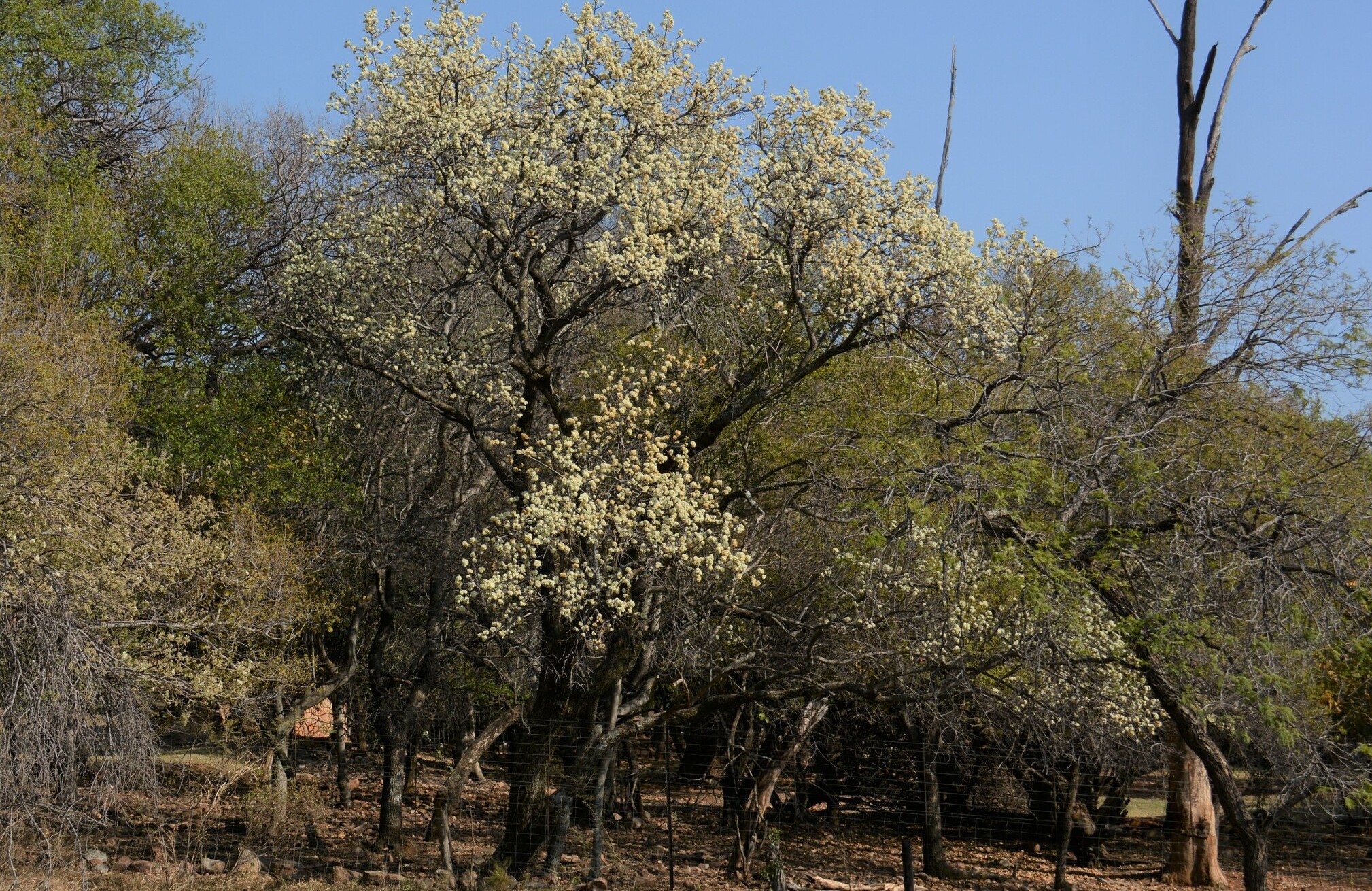
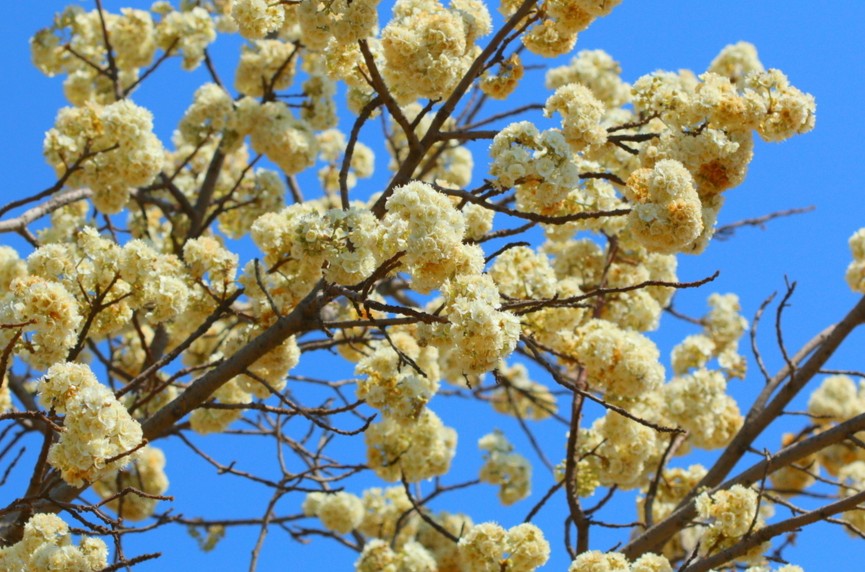
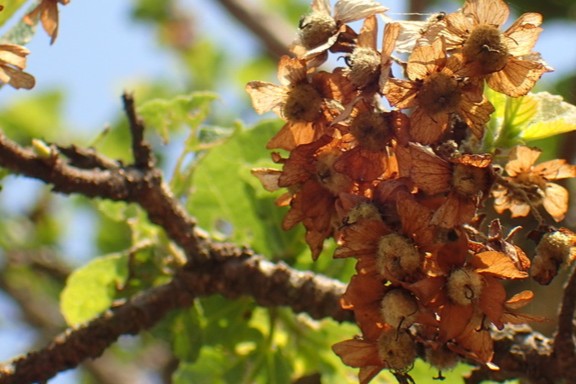
A small, upright, deciduous tree reaching 3–7 m (sometimes to 10 m), with a single trunk and rounded crown. The bark is dark brown, rough and corky, providing protection against fire. Leaves are round, rough to the touch and covered with characteristic star-like hairs. In early spring (July–September), masses of white, scented flowers bloom on bare branches before the leaves appear, reminiscent of cultivated pear trees. Flowers give way to small, silky-haired capsules, and old petals remain as papery wings to disperse seeds. Grows on a range of soils, often in woodland, grassland, or on rocky slopes and termite mounds. Suitable for gardens as a specimen or avenue tree.
Plant Details
Height
3 - 10 m
Thorns
Absent
Soil
Prefers well-drained soils; tolerant of poor soils.
Insects: Offers nectar and pollen for bees (important for early brood stimulation), butterflies, wasps, beetles, and other insects. The tree is host to at least one butterfly species (Ragged Skipper Caprona pillaana) and nine species of moth larvae, including Anaphe reticulata.
Flowers and rough bark provide habitat for a diverse insect fauna; scale insects such as Lecanodiaspis tarsalis also occur. Leaf beetles and caterpillars may eat significant leaf matter.
Wildlife: Leaves are browsed by game (elephants, antelope), livestock, and rabbits. Provides nesting and shelter for birds and small mammals.
Ecosystem Services: Early flowering, erosion control, pollinator resource, wind-dispersed seeds, and fire resistance. Often grows on termite mounds, benefiting from the enriched soils, whilst stabilizing these mounds with its root system.
Flowers and fruits
Insects: Bees, butterflies, and other pollinators visit the nectar- and pollen-rich flowers. It has been notes as an important bee tree for honey production.
Seed is mostly spread by wind due to persistent, papery petal wings.
Birds
Attracts insectivorous birds such as woodpeckers and nectar-feeding species. It also offers nesting sites in its rough bark and branching structure.
By Seeds:
Easily propagated from seed sown in spring. Seeds will germinates readily in a fine well-draining, but moist medium. Transplant seedlings when strong into sandy, well-drained, compost-rich soils.
By Cuttings:
Stem cuttings may root, but seed is the preferred method of propagation.
Traditional Uses
Historical Uses: Bark used for cordage (string/rope), fence posts, firewood, and termite-resistant timber. Wood used for wagon and carriage making due to its toughness.
Medicinal Uses: Medicinally used for a range of ailments; flowers reportedly used in love potions, roots as a decoction for yaws and abdominal problems in East Africa.
Toxicity: No significant toxicity recorded for humans or livestock.
Pharmacological Action: Not extensively researched, but traditionally used as an antimicrobial and anti-inflammatory remedy.
Bioactive Phytochemicals: Specific compounds not well documented.
Livestock & Fodder: Actively browsed by livestock and game.
Cultural Significance: Valued for spring display, honey production, and traditional applications.
Ecological Significance: Dombeya rotundifolia is a keystone tree for spring food resources, pollinator diversity, and early nectar supply. It is rated as Least Concern but remains ecologically important for woodland and grassland stability and as part of pollinator corridors across its range.