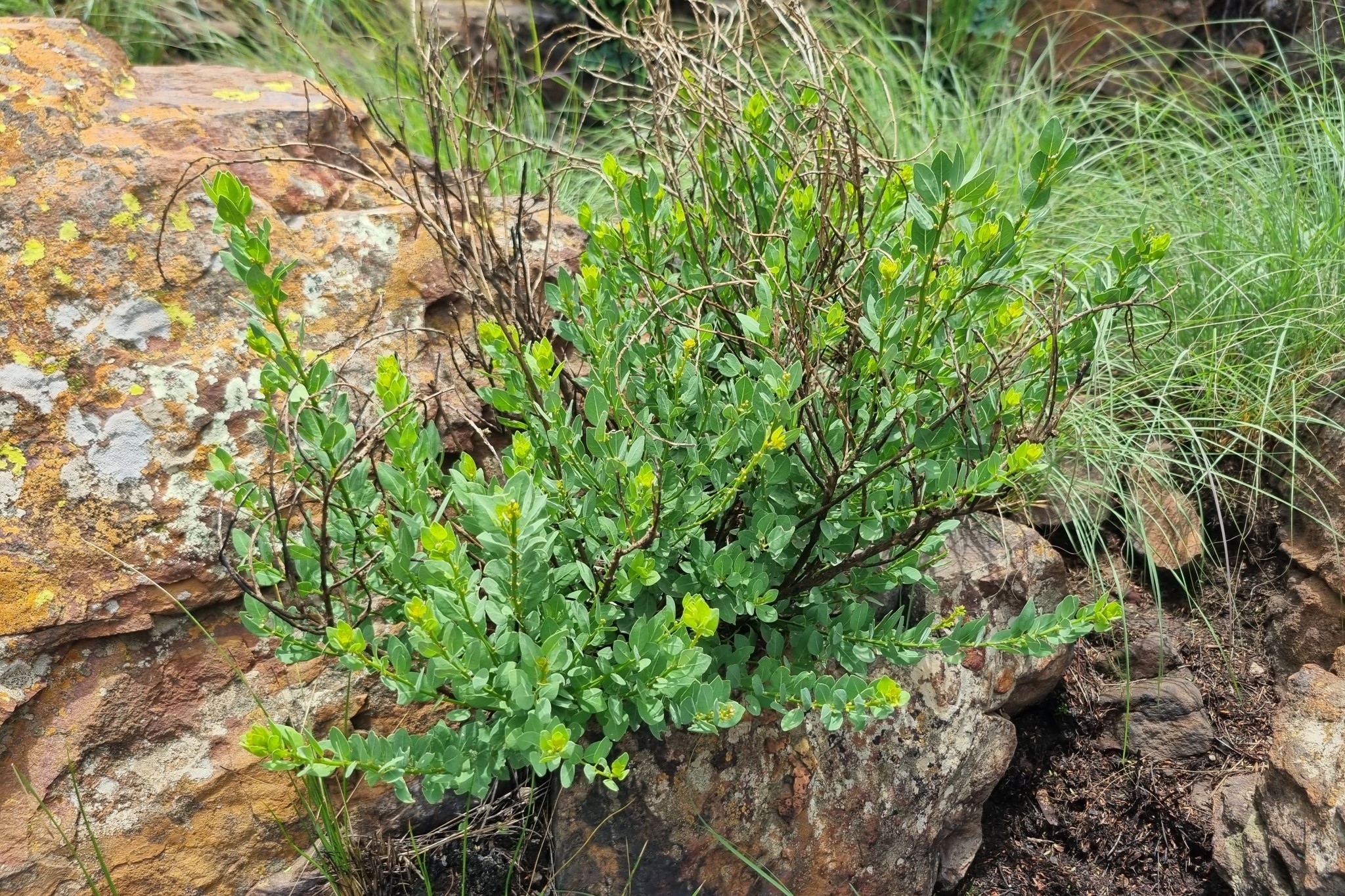
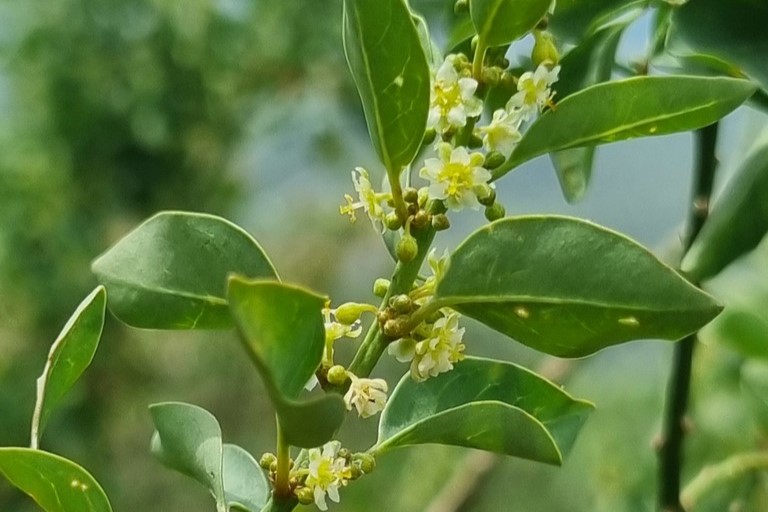
Flowers attract pollinators and fruits are eaten by birds and mammals.
Habitat and Shelter: The dense, shrubby nature of Clutia pulchella provides shelter and nesting sites for various insects and birds. Its structure allows small animals to hide from predators and harsh weather.
Beneficial insects, particularly moth caterpillars and pollinators, use the plant to which in turn are prey for insectivores such as birds, chameleons, lizards, and mantids.
Flowers and fruits
Small flowers attract a range of pollinators.
Fruits eaten and dispersed by animals.
Birds
Provides food for frugivorous and insectivorous birds and shelter for small birds.
By Seeds:
Collect seeds once the fruits mature. Sow fresh for best germination rates.
Germination rates are moderate.
By Cuttings:
Difficult; mainly propagated by seed.
Traditional Uses
Traditional medicinal uses:Stomach ache and diarrhoea: Leaves, stems, or roots are prepared as a hot infusion. For children, the plant mixed with milk may be given as an enema, and it has also been used similarly in calves.
Sprains: The ash from the roots is sometimes applied, often after scarification, to speed the healing of fractures and sprains.
Headache and swollen glands: Traditional preparations are used for headaches and to treat swollen glands (adenoids).
High blood pressure: Some regional traditions report using the leaves to manage high blood pressure.
Other Traditional Uses: The plant is also sometimes employed as a love charm and as protection against lightning, though these are not medicinal applications.
Soil Stabilization and Erosion Control: The plants play an important role in stabilizing soil and preventing erosion, especially in their native habitats such as rocky hillsides, watercourses, grasslands, savannas, and karroid scrub environments. Its bushy growth helps anchor the soil, which is crucial in areas prone to erosion.