Celtis africana

Celtis africana Burm.f.

White Stinkwood

Afr

Witstinkhout

isiZulu

uSinga lwesalukazi

IsiXhosa

umVumvu

Description

Family:

Cannabaceae

Order:

Rosales

Description

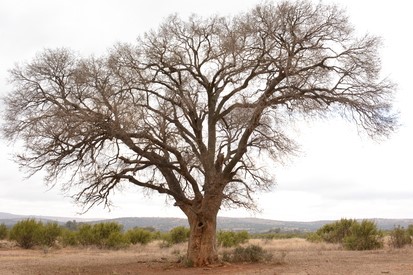
Celtis africana is a medium to large, deciduous or semi-deciduous tree with a dense, rounded crown and smooth, pale grey to white bark that may peel in older trees.

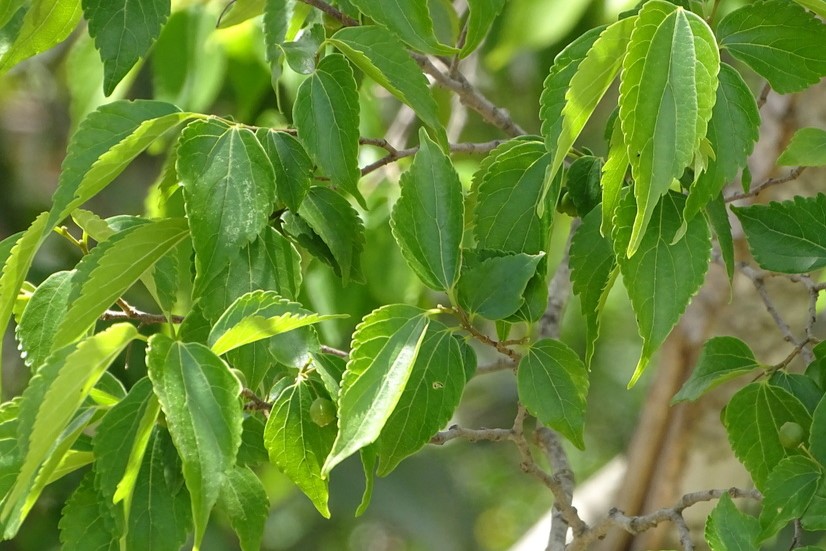
The leaves are simple, alternate, ovate to acuminate, with serrated margins toward the tip.

Small, greenish-yellow flowers appear in spring, followed by small, fleshy, berry-like fruits that ripen from green to yellow, orange, or purplish-black.

The tree is highly adaptable, growing in forests, bushveld, riverbanks, mountain gorges, and open grassland.

Plant Details

Height

10-25 m (depending on habitat and conditions)

Thorns

None

Soil

Adaptable; prefers deep, well-drained loamy soils but tolerates a range of conditions

Fast (up to 1-2 m per year)

Growth Rate

10-25 m (depending on habitat and conditions)

Size

Several decades

Lifespan

Flower Colour

Flowering Season

, , , ,

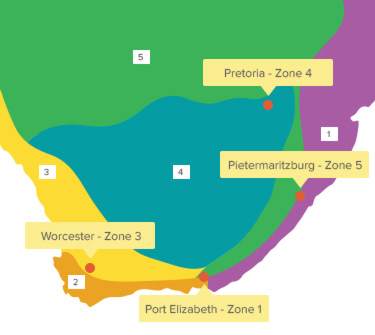
Horticultural Zones

Neutral to slightly acidic

pH

Adaptable; prefers deep, well-drained loamy soils but tolerates a range of conditions

Soil

Full sun to partial shade

Aspect

High

Frost Tolerance

High

Drought Resistance

Companion Plants

Pairs well with other indigenous trees and shrubs in forest, woodland, or riverine plantings; suitable for mixed habitat restoration.

Caterpillars

Butterflies: Charaxes cithaeron (Blue-spotted King), Libythea labdaca laius (African Snout). Moths: Eudasychira georgiana, Exophyla multistriata, Ascotis reciprocaria, Chloroclystis jansei, Cleora herbuloti, Pitthea trifasciata, Caloptilia celtina, Eutricha capensis, Eutricha obscura, Zeuzera coffeae, Stigmella celtifoliella, Androlymnia torsivena, Apospasta fuscirufa, Lophotarsia ochroprocta, Anaphe reticulata, Stemmatophalera sjostedti, Diaphanopsyche rogenhoferi, Bunaea alcinoe, Pseudobunaea tyrrhena, Pseudoclanis postica

Associations

Descriptions

The tree is ecologically important, providing food and habitat for a wide range of wildlife.

Browzers: Its leaves are browsed by cattle, goats, and wild herbivores.

Fruits: The fruits are eaten by birds, monkeys, and other mammals, aiding seed dispersal.

Pollinators: Flowers are pollinated by insects, especially bees.

Lepidoptera: A wide range of moths and two butterfly caterpillars feed on the leaves.

Flowers and fruits

Small, greenish-yellow flowers in spring, pollinated by insects. Fruits are small, fleshy drupes, ripening to yellow, orange, or black, and are a key food source for birds and other wildlife.

Birds

Fruits are eaten by a wide variety of birds, including bulbuls, mousebirds, barbets, thrushes, starlings, pigeons, and parrots. The tree also supports insectivorous birds by attracting caterpillars and other insects.

By Seeds:

Sow fresh seeds in well-drained soil. Germinates readily. Seedlings transplant well.

(Once seedlings are established in the ground, they do not transplant well).

By Cuttings:

Not commonly used. Propagation is primarily by seed.

Traditional Uses

Used for shade, timber, and traditional medicine; wood used for furniture and carvings.
Leaves browsed by livestock and wildlife.
Not known to be toxic.
Excellent for shade, habitat creation, soil stabilization, and increasing biodiversity in restoration projects.

Plant Details

Height

Description

Thorns

Description

Leaves

Description

Size

Growth Form

Size

Size

Size

Lifespan

Size

Flower Colour

Size

Flowering Season

Size

Horticultural Zones

Size

pH

Size

Soil

Size

Aspect

Size

Frost Tolerance

Size

Drought Resistance

Description

DESCRIPTION

Height

DESCRIPTION

Leaves

DESCRIPTION

Thorns

DESCRIPTION

BSS

Ecoscore

Host plant Nectar Grazing

Link to PlantzAfrica.co.za

View

Distribution

Companion Plants

Description

Caterpillars

Associations

Leaves

Leaves

Flowers and fruits

Leaves

Birds

Leaves

Mammals

Leaves

By Seeds:

Leaves

By Cuttings:

Leaves

Traditional Uses

traditional uses