Bergvaalbos, Bergvaalboom
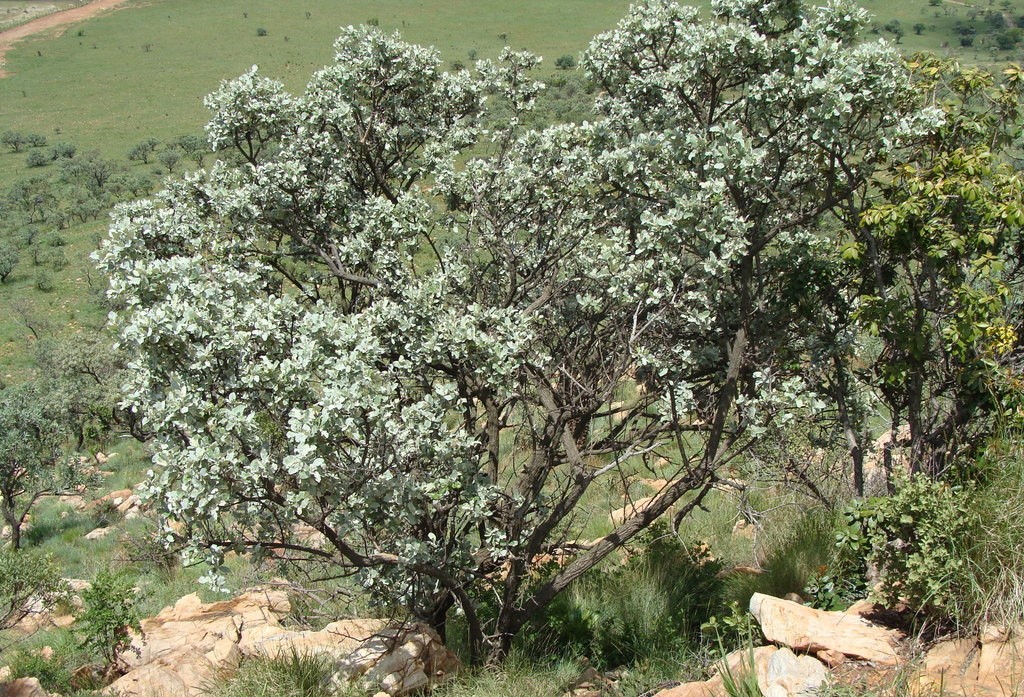
Brachylaena rotundata is a hardy, medium-sized, semi-deciduous to deciduous tree or large shrub with slender, drooping branches and corky bark.
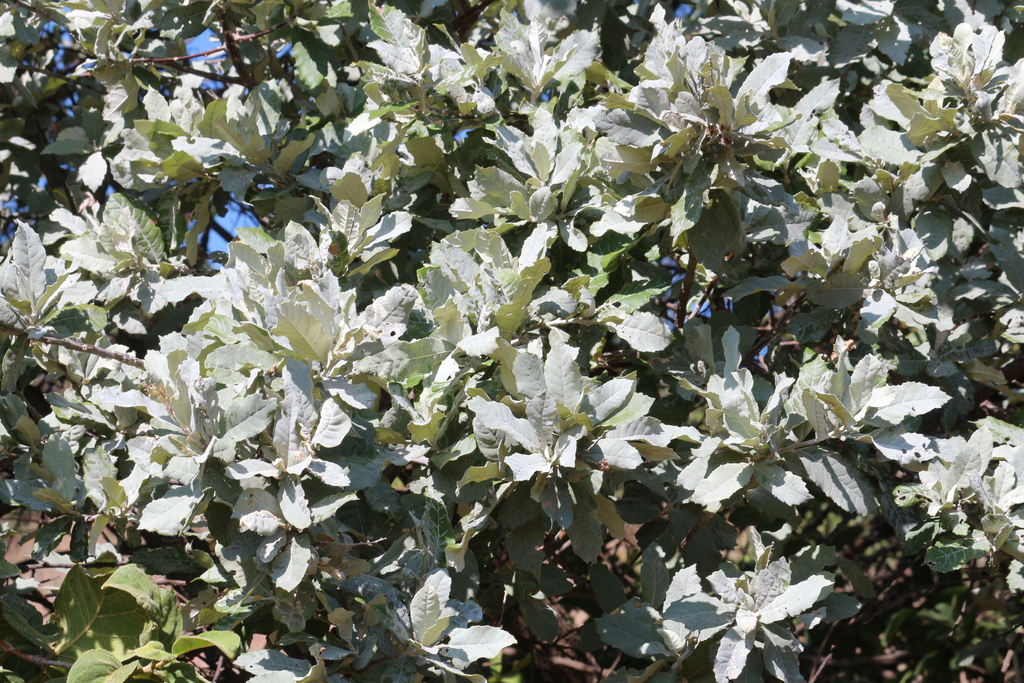
The foliage is leathery, silver-grey, and covered with cobwebby hairs when young, turning reddish in autumn.
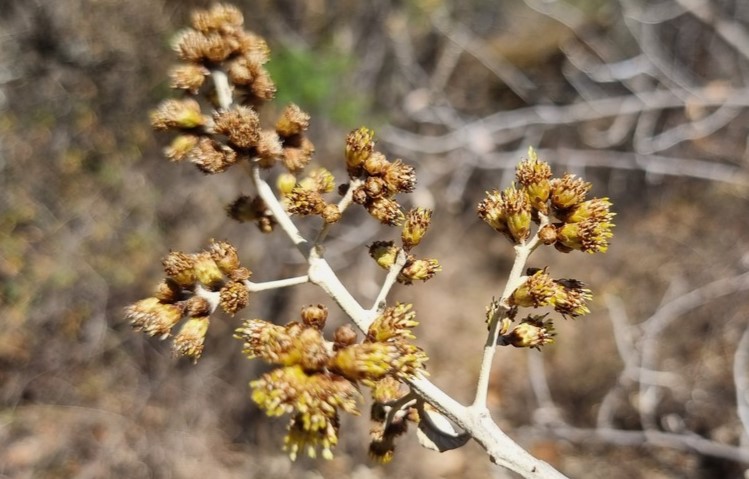
It produces yellow, thistle-like flowers from late winter to spring. The species is dioecious, with male and female flowers on separate trees.
It is drought-resistant and well-suited to rocky hillsides, open woodland, and stream banks.
Insects: The yellow flowers attract bees and other pollinators with abundant nectar.
Wildlife: Young leaves are browsed by game, while mature leaves are bitter.
The tree provides shelter and nesting sites for birds and insects.
Its dense foliage offers protection for small animals and helps stabilize soil in rocky habitats.
Male and female flowers on separate trees; yellow, thistle-like flower heads in late winter to spring.
Fruits are wind-dispersed cypselas with tufts of bristles.
Provides nesting sites and shelter; attracts insectivorous birds due to insect activity around flowers.
Sow fresh seeds in sandy, well-drained soil; germination is reliable.
Semi-hardwood cuttings can be rooted with hormone treatment.
Traditional Uses: Wood used for fence posts and tool handles.
Livestock: Young leaves browsed by game and livestock, especially during drought.
Ecological uses: Excellent for soil stabilization, windbreaks, and increasing biodiversity in degraded or rocky areas.