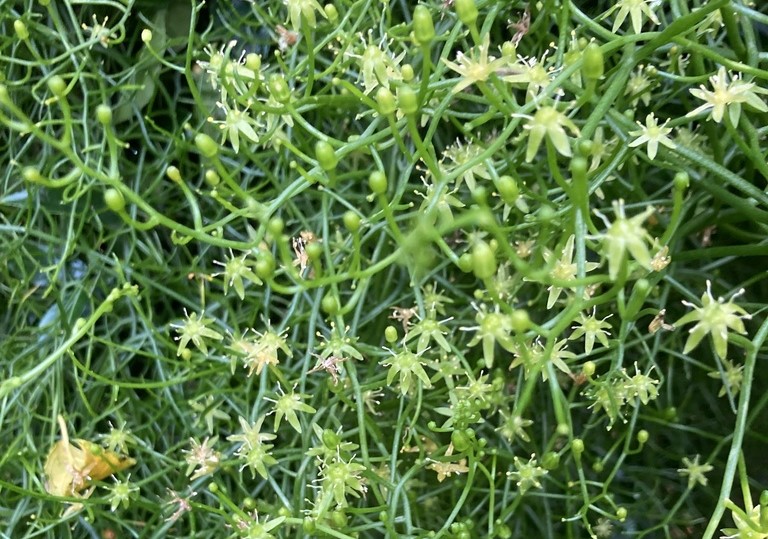
Bowiea volubilis is a perennial, bulbous climber with a large, green, scaly bulb partly exposed above ground. It produces slender, bright green, highly branched, leafless stems that twine up to 3 – 4 meters, functioning as the main photosynthetic organs.
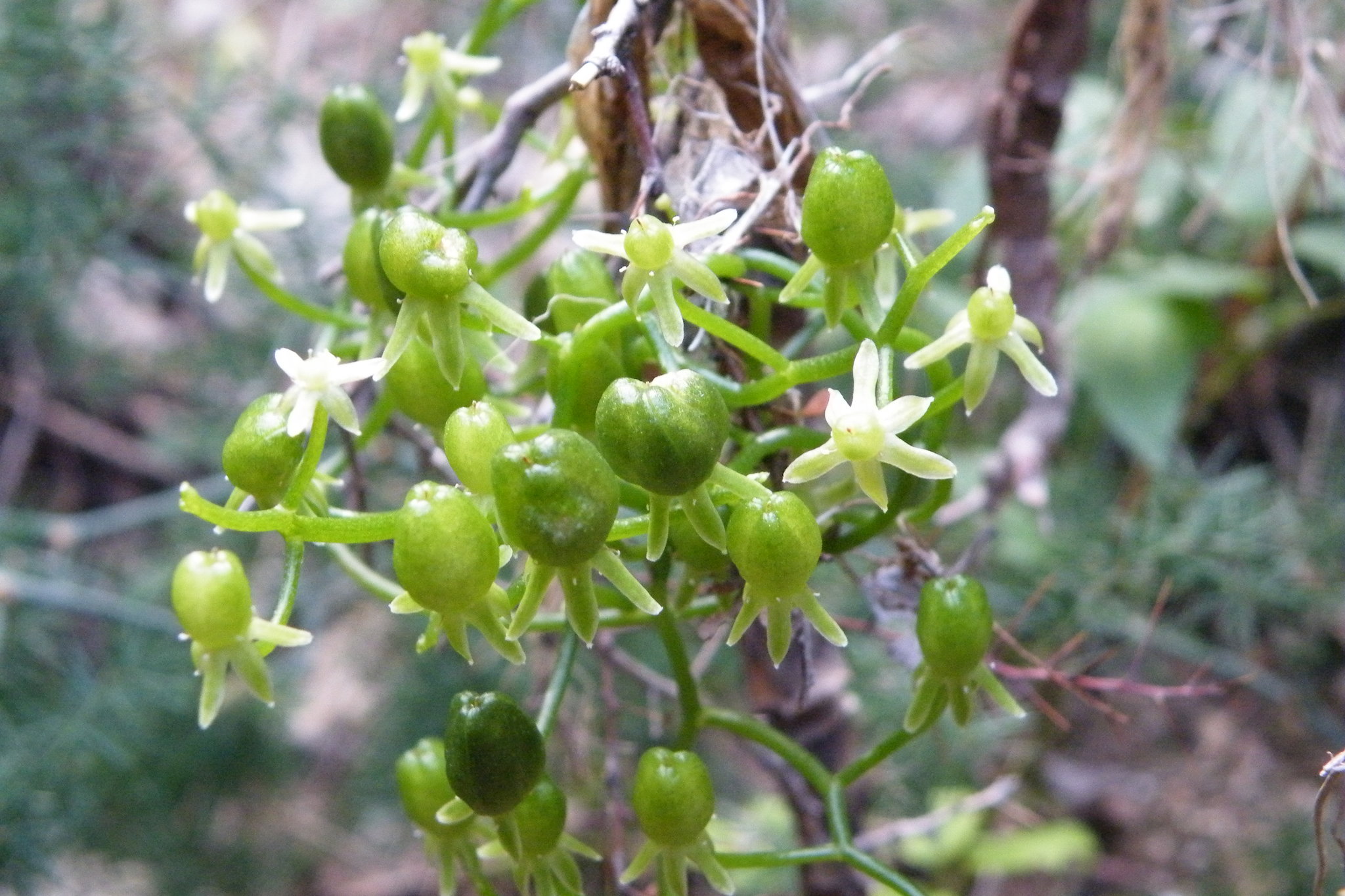
Small, star-shaped, greenish-white flowers appear in late summer, followed by brownish capsules with fine black seeds.
The plant is adapted to both wet and dry conditions and is often found in shaded, rocky habitats.
It is highly toxic to humans and animals.
Plant Details
Height
3 - 4 m (climbing stems)
Thorns
None
Soil
Prefers well-drained, loamy or rocky soils; tolerates shallow, gritty soils
Grows among rocks, shrubs, and other succulents in shaded or semi-shaded habitats.
Caterpillars
Moth: Leucaloa eugraphica
Associations
Descriptions
The plant’s unusual climbing stems provide microhabitats for several invertebrates.
Its flowers are pollinated mainly by flies and possibly other insects.
As a succulent, it is adapted to survive in challenging environments and can help stabilize soils in rocky areas.
Flowers and fruits
Small, greenish-white, star-shaped flowers in late summer; pollinated by flies.
Fruits are brown capsules containing fine black seeds.
Birds
Not a direct food source, but may support insect prey for insectivorous birds.
By Seeds:
Sow fresh seeds in sandy, well-drained soil in semi-shade; germination can be slow.
By Cuttings:
Not commonly practiced; slow vegetative propagation.
Traditional Uses
Traditional Medicine: Widely used in traditional medicine for various ailments and rituals, even though it is extremely toxic and can cause cardiac failure if ingested. Livestock: Toxic to livestock. Highly toxic to humans and animals. Ecological services: Useful for stabilizing rocky slopes and increasing biodiversity in specialized habitats. There are concerns about its conservation due to over-harvesting for traditional medicine.