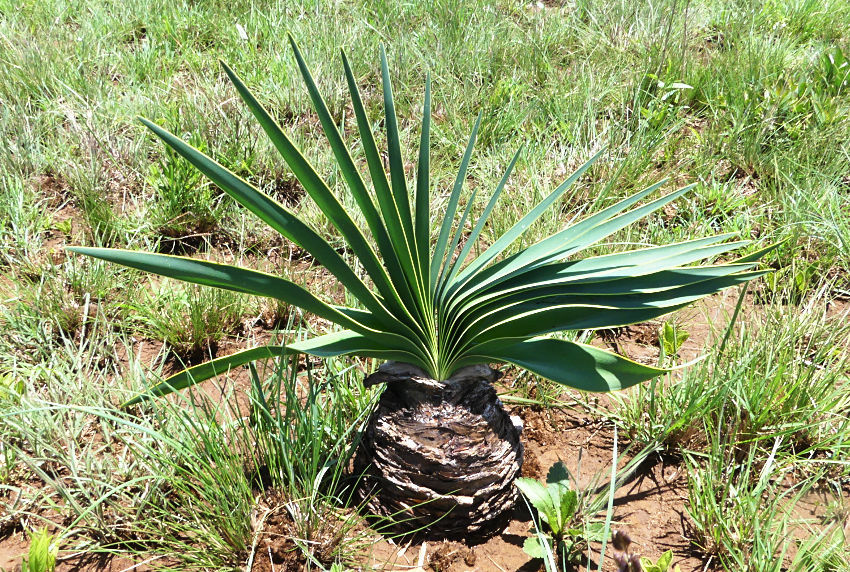
This perennial, deciduous herb has a large bulb that is partially above the soil surface, encased in persistent dry sheaths.
The leaves form a grey-green fan that emerges following flowering and persists through summer.
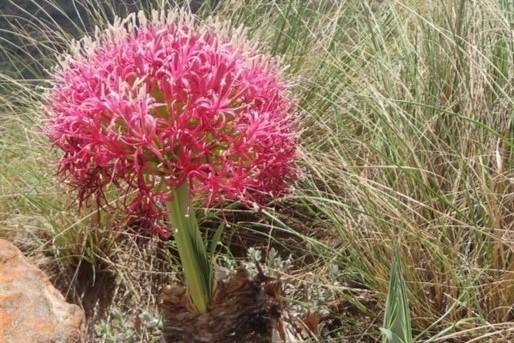
In spring, the plant produces a massive inflorescence: a dense, spherical head of pink to red flowers borne atop a tall, robust stalk.
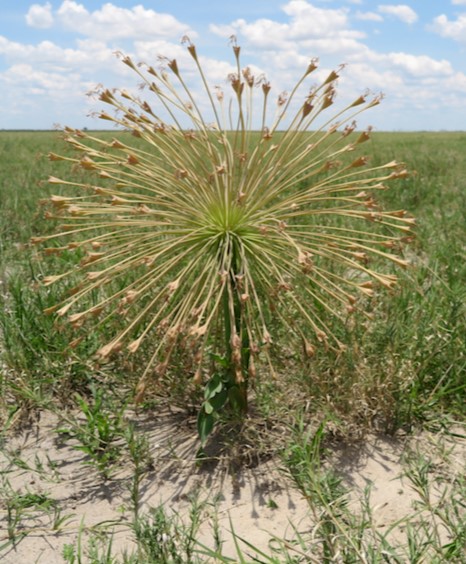
Pollination occurs rapidly, and as seeds develop, the flowering head enlarges before drying out into a large, round seed head. Upon maturation, the inflorescence forms a lightweight ball made of papery capsules around the round seeds. The seed heads break off and roll in the wind, effectively scattering seeds across the landscape.
Plants are often found along fences that stop the rolling seed heads.
The bulbous plant makes a striking feature in rockeries and grassland garden settings.