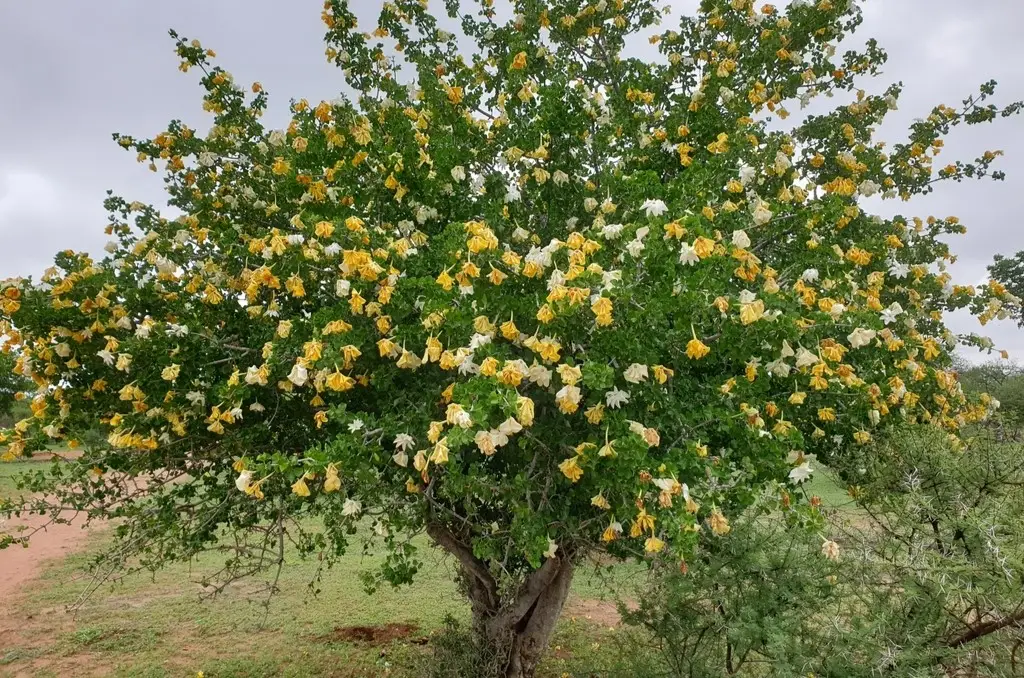
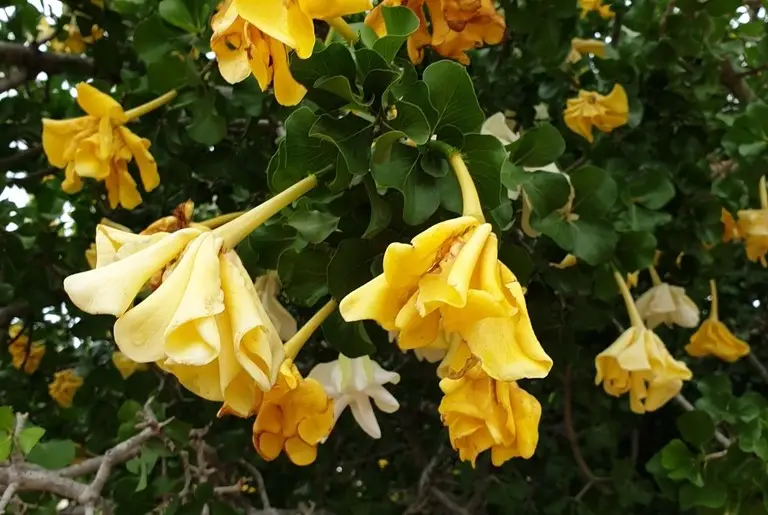
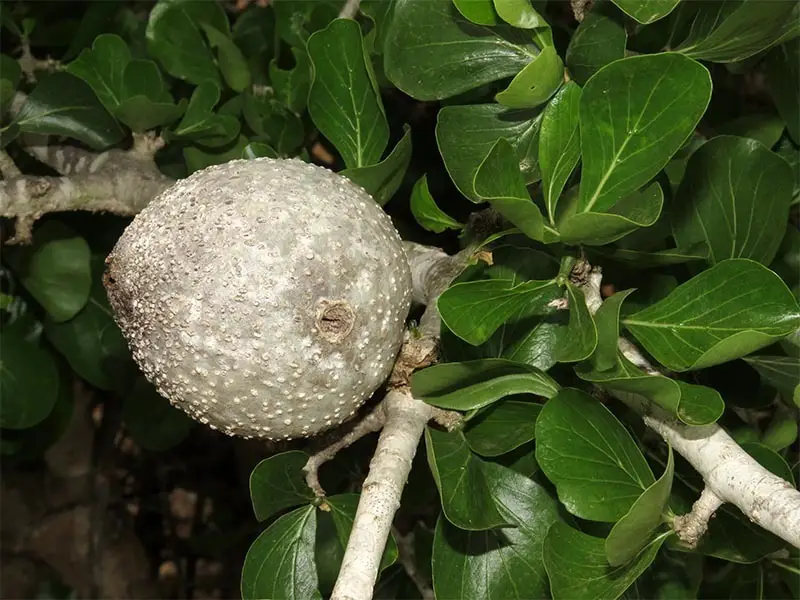
A hardy, drought-resistant, semi-deciduous to evergreen small tree or large shrub, 3 – 8 m high. It has a dense, rounded crown with arching branches sometimes touching the ground. Bark is pale grey, smooth on young branches, flaking in small thick patches on older parts, creating a mottled appearance. Leaves are shiny, spoon-shaped, clustered in whorls of three, usually under 5 cm long. Flowers are large, trumpet-shaped, white turning yellow with age, sweetly scented, opening at night attracting moths and other insects. Fruits are large, round to oval, grey with prominent ribs and white lenticels, containing orange pulp with seeds, remaining on the tree for a long time.
Plant Details
Height
3 - 8 m
Thorns
Absent
Soil
Adaptable to a wide variety including well-drained sand to poorly drained clayey soils; often in rocky areas.
Commonly associated with mopane woodland, bushveld species including Acacia, Combretum, Terminalia.
Caterpillars
Host plant for butterfly larvae including Carlisis wahlbergii and Deudorix dinochares.
Associations
Descriptions
Flowers open at night, attracting moths and other nocturnal pollinators; fruits eaten by birds and mammals aiding seed dispersal; supports butterfly larvae such as Carlisis wahlbergii and Deudorix dinochares. Provides shelter and nectar for diverse insects and birds.
Flowers and fruits
Large, white, tubular flowers turning yellow and brown with age; fruits large, ribbed, grey with lenticels, containing orange pulp and seeds.
Birds
Nectar source for moths and other insects; fruits eaten by frugivorous birds and mammals; provides shelter.
By Seeds:
Seeds can remain dormant; soak fruit in water and macerate pulp before sowing; seeds can be stored for months if dried well; sow fresh for best results.
By Cuttings:
Can be propagated from cuttings; semi-hardwood cuttings root moderately well.
Traditional Uses
Used medicinally: infusion from fruits and roots to stop vomiting; wood used for carvings; culturally significant in traditional practices.